
Mild HBOT for Athletic Recovery: Evidence, Limits, and Safety
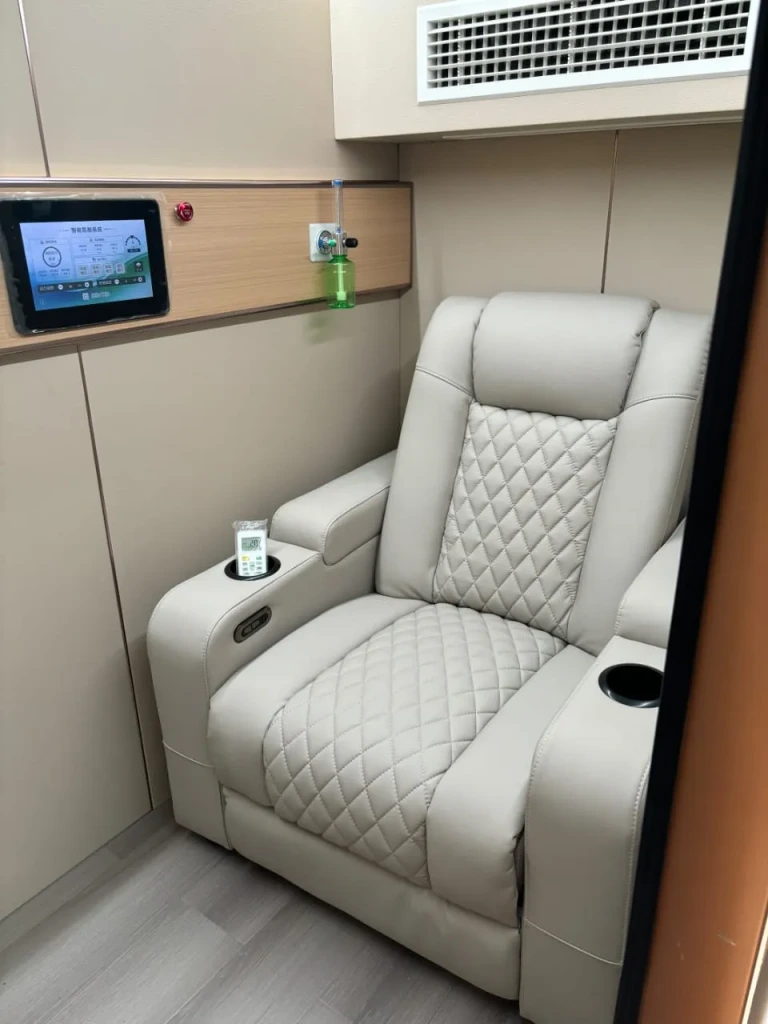
Athletes are increasingly offered mild hyperbaric oxygen therapy, often called mild HBOT or mHBOT, after training, travel, or competition. The idea is appealing: spend time in a pressurized chamber, breathe an oxygen-enriched gas, and support recovery. The important question is not whether pressure changes oxygen exposure—it does—but whether a specific chamber, protocol, and athletic goal are supported by reliable evidence.
The safest way to evaluate mild HBOT is to separate three issues: the type of chamber, the oxygen concentration and pressure actually delivered, and the outcome being promised. Those details determine whether a service resembles clinical hyperbaric oxygen therapy or a lower-pressure wellness session.
TL;DR: Mild hyperbaric oxygen therapy is marketed for athletic recovery, but it is not equivalent to clinical HBOT and the evidence for faster recovery or improved performance remains limited. Treat it as an optional, non-proven recovery service—not a substitute for sleep, nutrition, rehabilitation, or medical care—and verify supervision, device documentation, and emergency procedures before use.
What is mild HBOT?
Clinical hyperbaric oxygen therapy generally involves breathing high-concentration oxygen in a chamber at a pressure prescribed and monitored by trained medical staff. The Undersea and Hyperbaric Medical Society notes that low-pressure fabric chambers do not meet its definition of clinical HBOT and that mild hyperbaric treatment below clinical pressure thresholds is unproven for medical purposes other than the specific intended use of some devices.
A soft chamber pressurized with air may provide a different exposure from a hard chamber delivering medical oxygen. Pressure alone, oxygen concentration alone, and the marketing term “HBOT” are not enough to establish equivalence. Ask for the operating pressure, breathing-gas configuration, intended use, and regulatory documentation for the exact model.
What does the evidence say about athletic recovery?
Research on hyperbaric exposure in sport is mixed and often based on small studies, different pressures, different oxygen delivery methods, and different outcomes. Evidence from a clinical protocol cannot automatically be applied to a mild soft-shell chamber. Claims about reducing soreness, accelerating return to play, or improving performance should therefore be treated cautiously unless they refer to a clearly described protocol and a relevant peer-reviewed study.
For most athletes, the foundations of recovery remain adequate sleep, progressive training load, nutrition, hydration, and rehabilitation directed by qualified professionals. Mild HBOT may be explored as an optional service, but it should not delay evaluation of persistent pain, concussion symptoms, breathing difficulty, or another injury that needs medical attention.
How should athletes assess a recovery facility?
A responsible facility explains what its chamber can and cannot do. Staff should be able to describe screening, pressure equalization, session supervision, cleaning, maintenance, prohibited items, and the response plan for anxiety, ear pain, power failure, or another emergency. The FDA’s 2025 safety communication emphasizes following the manufacturer’s instructions, maintaining staff training, monitoring users throughout treatment, and applying fire-prevention procedures.
Be cautious when a provider promises a guaranteed performance gain, says one protocol works for every injury, or uses “FDA registered” as if it meant that every claimed benefit was reviewed. In the United States, the relevant question is whether the exact device is legally marketed for its stated intended use and whether the service stays within that use.
- Confirm the exact chamber model, maximum operating pressure, and breathing-gas setup.
- Ask who screens users and who monitors every session.
- Review contraindications, ear and sinus pressure risks, oxygen-related risks, and emergency procedures.
- Check maintenance records, staff training, cleaning procedures, and manufacturer support.
- Discuss the recovery goal with a sports physician or other qualified clinician when an injury is involved.
What risks should be considered?
Pressure changes can cause ear or sinus pain and, less commonly, more serious barotrauma. Clinical oxygen exposure can also create oxygen-related risks, while oxygen-enriched environments require strict fire controls. Some users experience claustrophobia or anxiety. Risk depends on the device, pressure, oxygen delivery, session duration, health history, and quality of supervision.
Do not enter a chamber with prohibited electronics, ignition sources, petroleum-based products, or unsuitable clothing. Follow the exact manufacturer instructions and facility rules. Anyone with a recent injury, lung condition, ear problem, fever, pregnancy, implanted device, or prescription medication should seek individualized medical guidance rather than relying on a generic online checklist.
Frequently asked questions
Can mild HBOT replace normal athletic recovery?
No. Sleep, nutrition, appropriate training load, hydration, and evidence-based rehabilitation remain the core of recovery. Mild HBOT should be viewed as an optional service with limited sport-specific evidence, not as a replacement for medical assessment or a structured recovery plan.
Is a soft chamber the same as clinical HBOT?
Not necessarily. Chamber construction, operating pressure, oxygen concentration, breathing-gas delivery, intended use, and supervision can differ substantially. Ask for specifications and regulatory documentation for the exact device instead of relying on the general term “hyperbaric.”
Sources and safety references
- U.S. FDA — Follow Instructions for Safe Use of Hyperbaric Oxygen Therapy Devices (2025)
- U.S. FDA — Hyperbaric chamber product classification (CBF)
- Undersea & Hyperbaric Medical Society — Position statement on low-pressure fabric chambers
- Mayo Clinic — Hyperbaric oxygen therapy: uses and risks
- U.S. FDA — Unique considerations for home-use medical devices
This article is educational and does not replace individualized medical advice, diagnosis, or emergency care.