
Single-Person vs Two-Person Hyperbaric Chambers: What Changes in a Real Project?
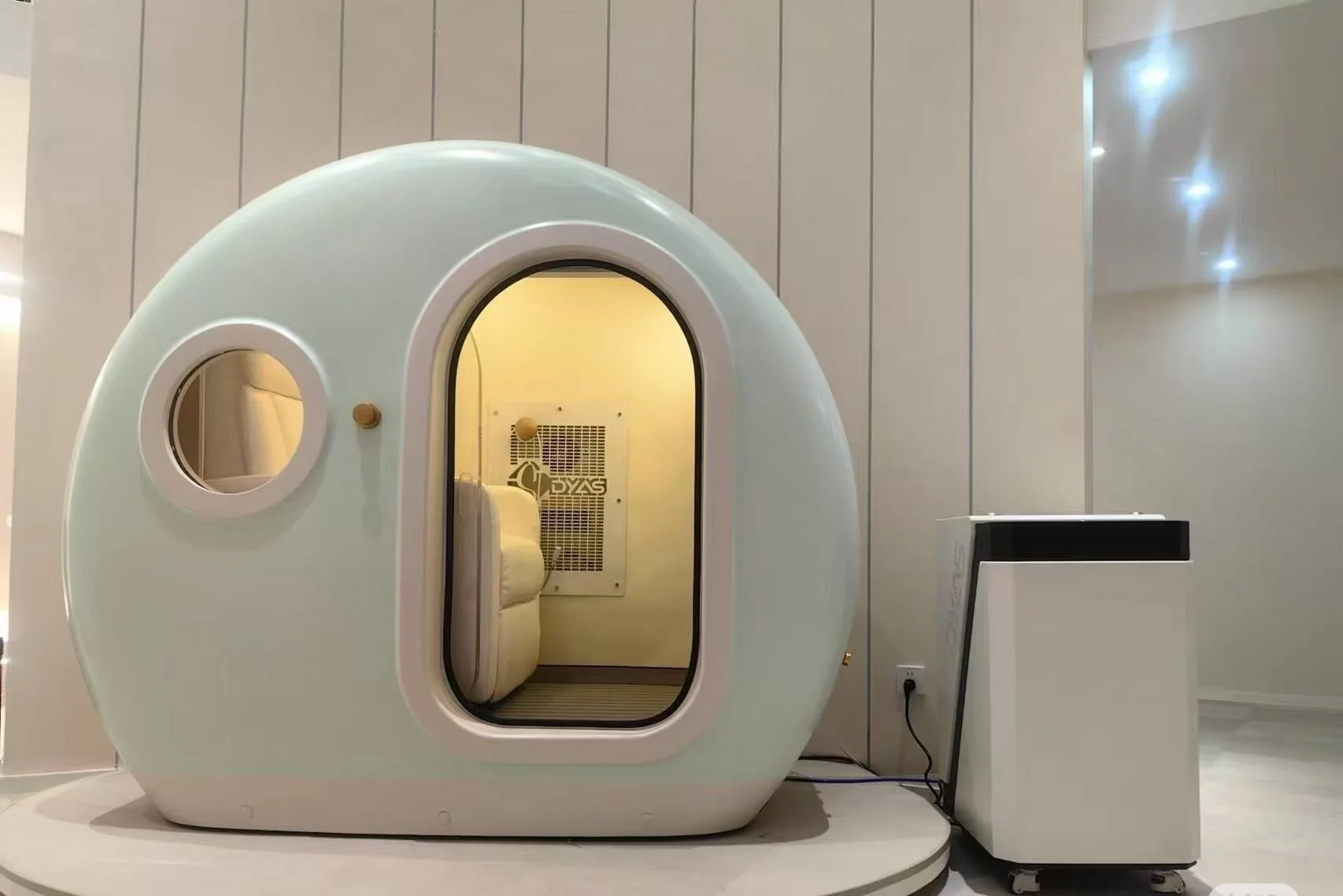
At first glance, this looks like a simple choice: one seat or two. In practice, the better question is what will happen in the room on a normal working day.
Will most sessions be booked by individuals? Will couples or companions regularly attend together? Is the room wide enough for the larger chamber, with space left for the operator and service access? And will the second seat earn its keep, or sit empty most of the week?
For homes, private wellness rooms and lower-volume studios, a single-person chamber is usually easier to place and schedule. A two-person chamber makes more sense when paired demand is real, the room can support the wider system, or the project deliberately wants a more spacious, shared experience.
This article compares the two configurations as equipment projects. It does not recommend medical treatment or operating protocols; those decisions belong with appropriately qualified professionals and the requirements that apply in the installation country.
Single-person vs two-person chambers at a glance
| Question | Single-person chamber | Two-person chamber |
|---|---|---|
| Who can use it per session? | One authorized occupant | Up to two authorized occupants |
| What is easier about it? | Placement, privacy and individual scheduling | Higher possible capacity and shared sessions |
| What needs closer planning? | Making sure the interior suits the intended user | Room width, delivery access, floor load and demand for the second seat |
| Where does it often fit? | Homes, private rooms and compact studios | Larger wellness, recovery and hospitality projects |
| What is the common buying mistake? | Choosing a cabin that feels too tight | Paying for capacity that is rarely used |
One terminology point matters here. In formal U.S. hyperbaric-facility language, standards distinguish single-occupancy and multiple-occupancy chamber classes. A product sold as a “two-person chamber” should not automatically be treated as a clinical multiplace system. The exact intended use, gas-delivery design, documentation and local requirements still have to be checked for the individual device.
What actually changes between the two OXY-35 configurations?
The OXY-35 offers a useful like-for-like comparison because the single-person and two-person versions share the same product family and published length and height. The main dimensional change is width.
| OXY-35 configuration | Published dimensions | Calculated shell footprint* | Occupancy |
|---|---|---|---|
| Single-person | 2000 × 980 × 1700 mm | 1.96 m² | 1 person |
| Two-person | 2000 × 1500 × 1700 mm | 3.00 m² | 2 people |
*Length × width only. It excludes entry, operator, equipment, emergency and service clearances.
The two-person model is 520 mm wider. Based on the published external dimensions, it doubles occupant capacity while increasing the shell footprint by about 53%, not 100%. That is potentially efficient use of floor area—but only if the second place has a real purpose.
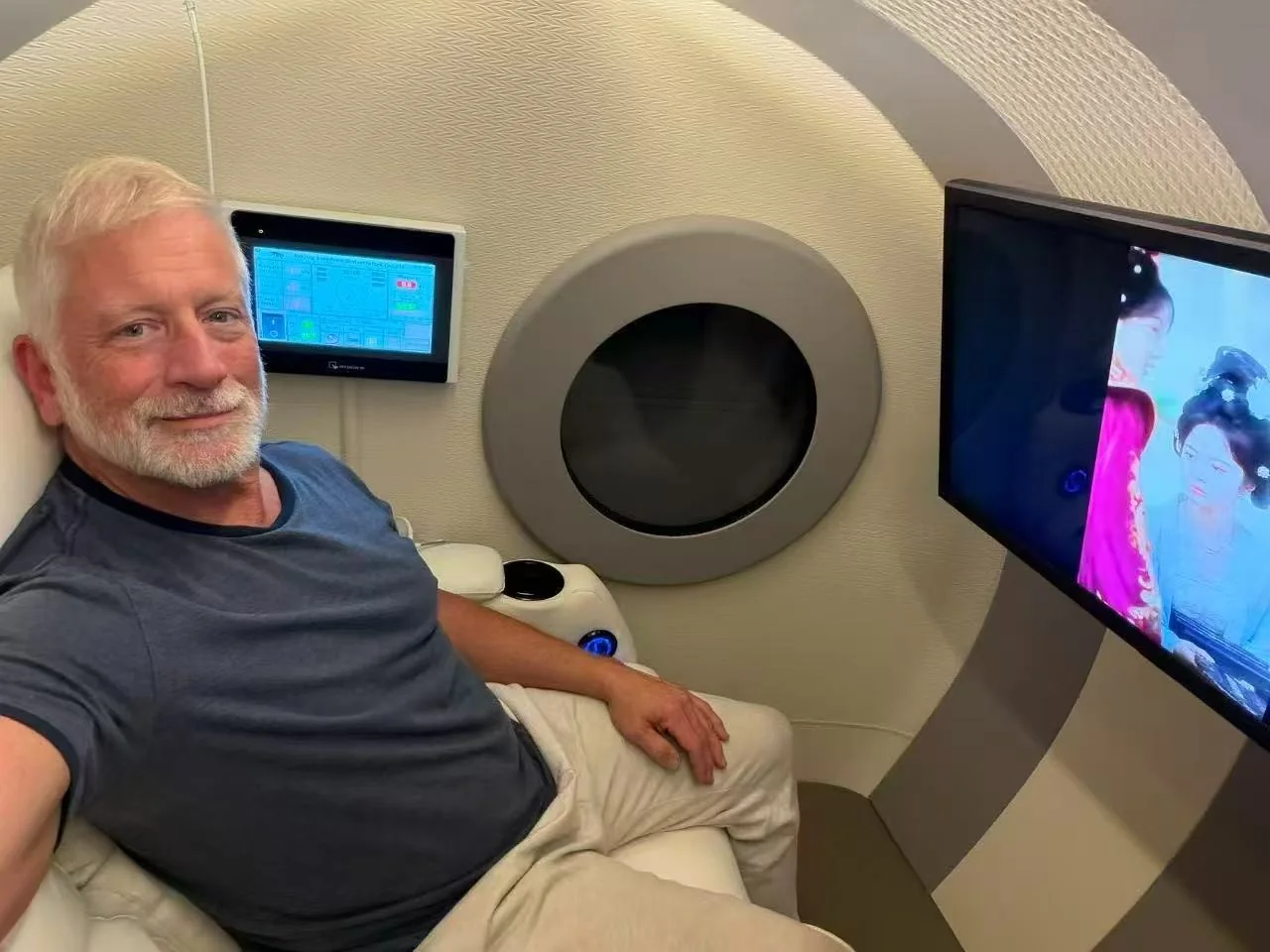
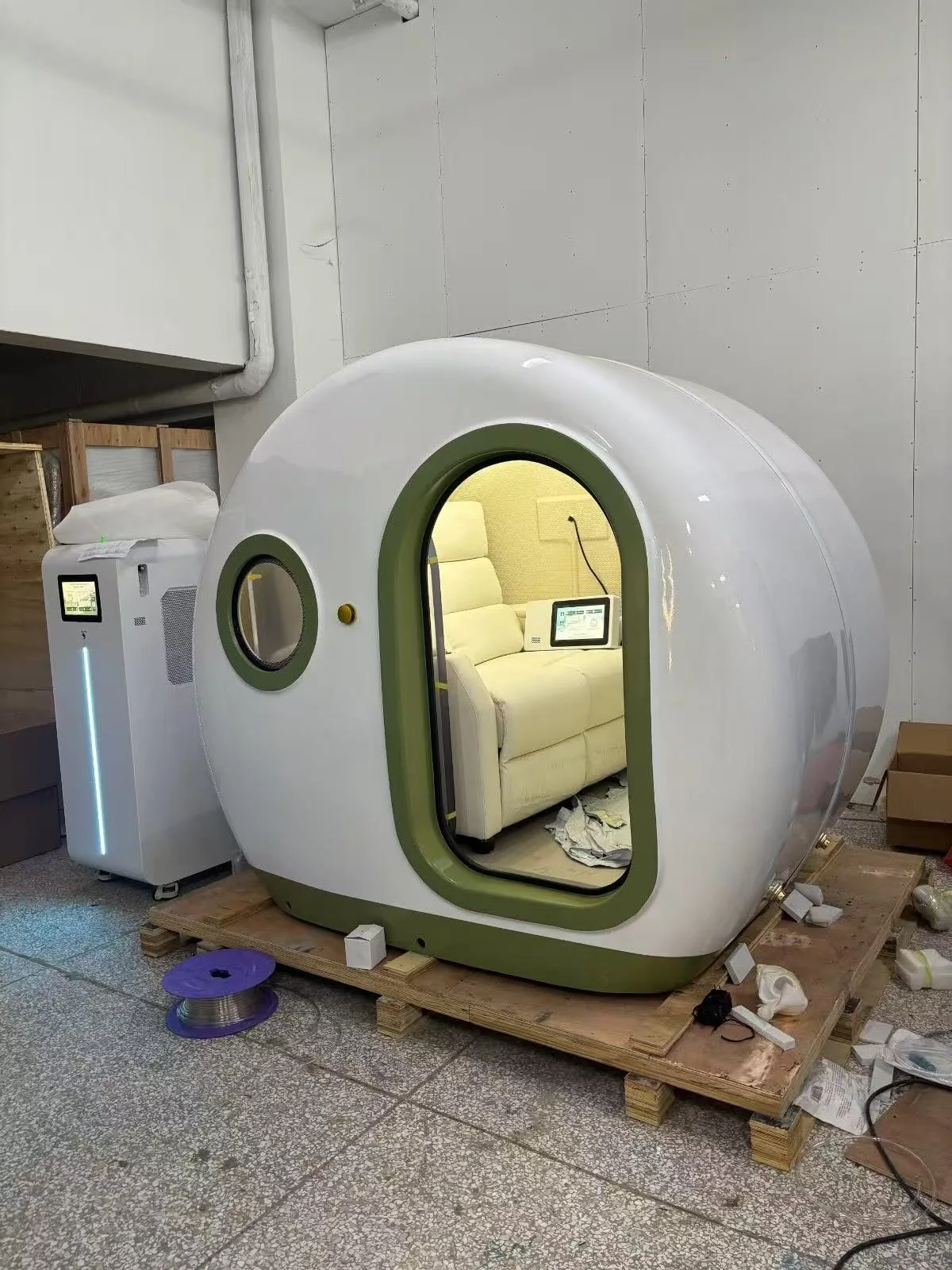
The photos make the trade-off easier to understand than dimensions alone.
Single-person OXY-35
Two-person OXY-35

How much room do you really need?
Published chamber dimensions are the beginning of a site plan, not the end of one. The equipment has to reach the room before it can operate there.
Measure the full route from the unloading point to the final position. Include gates, doors, corridors, lift doors and cabins, stairs, low ceilings and tight corners. If any part must be removed for delivery, the manufacturer should confirm what can be disassembled and how it must be reassembled and checked.
Inside the room, allow for more than the shell:
- the door swing and safe entry path;
- the operator’s position and line of sight;
- compressor, oxygen and cooling equipment included in the ordered system;
- hoses, cables and ventilation openings;
- cleaning and routine maintenance access;
- emergency access and manufacturer-specified clearances.
Weight matters as well, especially on an upper floor or raised platform. Ask for the installed operating weight of the exact configuration—not just a generic product-family figure—and have the site checked by an appropriate local professional.
The practical lesson is simple: a chamber that fits on a floor plan may still fail at the doorway, lift or service-clearance stage. Oxycron’s pre-installation checklist covers the wider route, utility and commissioning review.
Does two-person capacity mean twice the throughput?
Only when both seats are occupied. A two-person chamber doubles the maximum number of occupants per completed session block, but it does not create paired demand.
A simple planning calculation helps:
Daily occupant capacity = completed operating blocks × authorized occupants
Suppose a facility has an eight-hour day and reserves a 90-minute operating block for the scheduled session, entry, exit, cleaning and turnover. This is a business-planning example, not a treatment recommendation.
| Planning example | Single-person | Two-person |
|---|---|---|
| Full 90-minute blocks in 8 hours | 5 | 5 |
| Maximum occupants per block | 1 | 2 |
| Theoretical occupant capacity | 5 | 10 |
Now apply realistic demand. If the two-person chamber averages only one occupant per block, it delivers the same number of customer visits as the single-person chamber while using more room and carrying the cost of a larger project.
That does not make the larger chamber a poor choice. Some businesses value the roomier cabin, want companion sessions, or plan their service around couples and paired bookings. But those are business decisions that should be written into the plan before the purchase—not explanations added afterward.
For a new facility, compare at least three cases: conservative demand, expected demand and fully booked demand. Use occupied places rather than available seats when estimating revenue.
Which configuration gives customers a better experience?
There is no universal comfort winner. The photos show two different experiences, and each may appeal to a different audience.
The single-person cabin provides privacy. Appointments are also easier to manage because one customer does not depend on another arriving on time or being comfortable with a shared session. That often suits private wellness rooms, home installations and studios built around individual bookings.
The two-person cabin gives the project another option: two people can be accommodated together when the model instructions and operating procedure permit it. That may work well for couples, companions or a premium shared service. Some buyers may also prefer the greater interior volume even when the chamber is not booked to full capacity.
Seat count still tells only part of the story. Before ordering, compare:
- usable internal width and legroom;
- entry dimensions and ease of access;
- seat adjustment and body position;
- visibility through the windows;
- communication and control layout;
- temperature management and full-system noise;
- cleaning between bookings.
Ask to see a live demonstration of the exact configuration. Exterior photographs can show scale, but they cannot tell a tall user how the seat feels or show an operator whether the controls are convenient from the planned position.
Which option costs less once the complete project is included?
The single-person chamber will usually be the simpler starting project. The two-person chamber may produce a lower cost per occupied place, but only when the second seat is used often enough.
Compare both quotes on the same basis:
- Equipment: chamber, controls, compressor, oxygen source, cooling system and accessories.
- Delivery and site work: packaging, freight, insurance, duties, local transport, lifting, electrical work and ventilation.
- Handover: installation scope, checks, commissioning, training and documentation.
- Ownership: routine maintenance, filters, seals, spare parts, support and expected downtime.
Then divide the expected project cost by occupied sessions—not by the number of seats on the specification sheet. A low equipment price can be misleading if one quote excludes systems or services included in the other.
Oxycron’s hyperbaric chamber cost guide explains how to compare delivered configurations without treating a headline chamber price as the finished project cost.
Is either configuration inherently safer?
No. One seat versus two is not a safety grade.
The relevant questions concern the exact pressure vessel, intended use, chamber atmosphere and breathing-gas design, pressure controls, installation, maintenance and operating procedure. In the United States, the FDA classifies hyperbaric chambers under product code CBF as Class II devices. The agency’s 2025 safety communication emphasizes manufacturer instructions, fire prevention, grounding, staff training, supervision, cleaning, maintenance and safety checks.
ASME PVHO-1 addresses the design, fabrication, inspection, testing and marking of pressure vessels for human occupancy. Which standards, approvals and facility rules apply will depend on the destination, intended use and exact system.
For procurement, ask the supplier to connect every document to the model being quoted. A company certificate, component certificate or record for another chamber family is not model-specific evidence. The hyperbaric chamber buyer checklist provides a structured list of documents and support questions.
Which one is likely to fit your project?
A single-person chamber is usually the better fit when:
- the room or delivery route is tight;
- appointments will mainly be individual;
- privacy is part of the customer experience;
- demand is still being established;
- simpler scheduling matters more than maximum capacity;
- this is the site’s first chamber project.
A two-person chamber becomes easier to justify when:
- paired bookings are part of the service, not an occasional exception;
- the room, access route and floor can support the wider system;
- the larger interior is important to the positioning of the facility;
- the operating plan explains how the second seat will be sold;
- the budget covers the complete delivery, installation and support scope.
If neither list gives a clear answer, compare both OXY-35 configurations against the same room plan and three demand scenarios. That usually exposes the better choice quickly.
What should you send when requesting a comparison?
A useful quotation needs more than “one-person or two-person.” Send:
- country and destination city;
- intended setting and use;
- room, doorway, corridor and lift measurements;
- expected bookings per day and likely paired-booking rate;
- preferred seated or lying layout;
- target pressure range and supporting-equipment needs;
- voltage and frequency;
- target opening or installation date;
- required delivery term and local service expectations.
With that information, a supplier can compare real project scopes instead of sending two unrelated equipment prices. Use the Oxycron Project Quote form to select the models and include the site details.
Frequently asked questions
Can two people use a single-person hyperbaric chamber?
No. Never exceed the authorized occupancy. If two-person use is required, choose a configuration designed and documented for two occupants and follow its model-specific instructions.
Is the OXY-35 two-person chamber twice as large?
No. The published length and height are the same for both configurations. Width increases from 980 mm to 1500 mm; based on the external dimensions, the calculated shell footprint rises from 1.96 m² to 3.00 m², or about 53%.
Is a two-person chamber the same as a clinical multiplace chamber?
Not automatically. “Two-person” describes occupancy. Clinical classification, permitted use, gas delivery, supervision and facility requirements must be verified for the exact system and jurisdiction.
How much clearance should be left around the chamber?
There is no universal clearance for every model. Use the manufacturer’s installation drawing and include entry, operator, supporting equipment, ventilation, emergency, cleaning and maintenance space.
Which configuration is better for a new wellness center?
A single-person chamber is often easier when space is limited or demand is uncertain. A two-person configuration makes more sense when the facility expects regular paired use or has a clear reason to offer a larger shared cabin.
The decision in one sentence
Choose the single-person chamber when you need privacy, simpler scheduling and a smaller project; choose the two-person chamber when the second seat has a defined use and the site can support the wider system.
The real comparison is not one seat versus two. It is measured space, occupied demand, customer experience and complete project cost.
Explore the Oxycron chamber range or request an OXY-35 configuration comparison using your room measurements and expected daily bookings.