
Soft-Shell vs Hard-Shell Hyperbaric Chambers: Key Differences
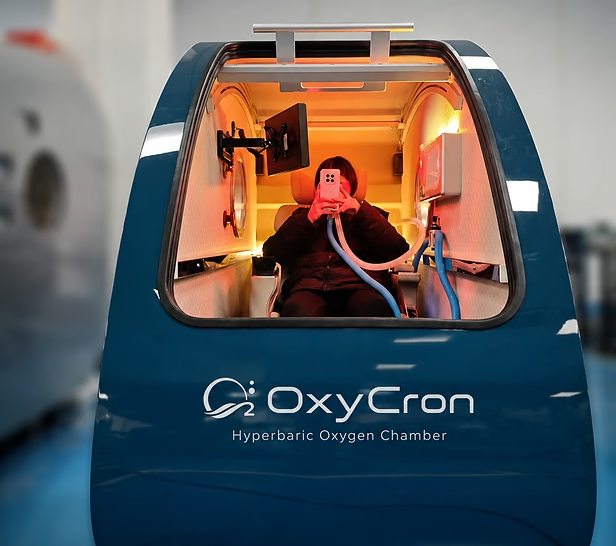
The phrases “soft-shell” and “hard-shell” describe chamber construction, but buyers often use them as shorthand for much more: pressure capability, oxygen delivery, clinical status, installation, comfort, and price. That shortcut can be misleading because two chambers with a similar shape may have different intended uses and regulatory documentation.
A useful comparison starts with the exact model and its instructions for use. Construction is only one part of the decision. Pressure range, breathing gas, controls, safety systems, operator requirements, servicing, and legal status all matter.
TL;DR: Soft-shell and hard-shell chambers are not interchangeable. Flexible chambers are generally lighter and operate at lower pressures, while rigid chambers can support different pressure and oxygen-delivery configurations. The right choice depends on intended use, local regulation, staffing, facility design, maintenance, and documented safety—not on appearance or price alone.
How do soft-shell and hard-shell chambers differ?
Soft-shell chambers use a flexible pressure envelope, typically supported by a frame and sealed with zippers or similar closures. They are usually easier to transport and install and generally operate at lower pressure. Hard-shell chambers use a rigid pressure vessel made from materials such as acrylic, steel, or a combination of engineered components. They may be designed for higher pressures and more complex oxygen-delivery systems.
These are general patterns, not a substitute for model-specific documentation. A chamber’s safe operating pressure, approved or cleared intended use, gas supply, occupancy, and operator requirements must be confirmed from the manufacturer’s instructions and applicable local rules.
Pressure and oxygen delivery
Pressure and oxygen concentration determine the exposure; the shell material alone does not. The Undersea and Hyperbaric Medical Society distinguishes low-pressure fabric chambers from clinical HBOT and warns against assuming that mild chamber exposure has the same therapeutic effect as medical protocols. Buyers should ask what gas fills the chamber, what the user breathes, the pressure range, and how those values are monitored.
For a medical service, the protocol should be selected by appropriately trained clinicians and delivered in equipment suitable for that use. For a non-medical wellness setting, marketing should not imply treatment of diseases or injuries that the device and service are not authorized to treat.
Installation, staffing, and daily operation
Soft-shell systems may need less structural preparation, but they still require adequate floor space, ventilation, electrical capacity, access control, cleaning, inspection, and safe storage. Hard-shell systems may require professional delivery, site planning, utility connections, structural review, and more specialized maintenance. Neither type should be treated as ordinary furniture.
The FDA advises facilities to follow the exact instructions for use, train staff, supervise users, maintain cleaning and safety checks, and enforce fire-prevention controls. A buyer should calculate the full operating model: trained personnel, consumables, oxygen supply where applicable, servicing, replacement parts, insurance, and downtime.
- Intended use and market authorization for the exact model.
- Maximum and normal operating pressure.
- Chamber gas and user breathing-gas configuration.
- Required operator qualifications and supervision.
- Emergency depressurization, communication, grounding, and fire controls.
- Installation, maintenance, warranty, parts, and local technical support.
Which chamber type is better?
There is no universal winner. A portable lower-pressure system may suit a clearly defined non-clinical use when it is legally marketed, installed, and operated as instructed. A medical facility delivering prescribed HBOT may require a rigid system, medical gas infrastructure, clinical staffing, and compliance with health-care facility standards. The answer depends on the service, not on which shell looks more advanced.
Before comparing quotations, write a one-page use specification: who will use the chamber, for what purpose, under whose supervision, at what pressure and oxygen configuration, and under which regulations. Vendors should respond to that specification with evidence rather than broad claims.
Frequently asked questions
Is a hard-shell chamber always medical equipment?
No. Rigid construction alone does not establish a medical intended use or regulatory status. Verify the exact model, labeling, clearance or authorization, pressure rating, oxygen system, and operator requirements in the country where it will be used.
Are soft-shell chambers safer because they use lower pressure?
Lower pressure changes the risk profile but does not remove risk. Ear and sinus pressure, equipment failure, prohibited items, oxygen handling, supervision, maintenance, and emergency procedures still require attention. Safety depends on the complete system and how it is operated.
Sources and safety references
- U.S. FDA — Follow Instructions for Safe Use of Hyperbaric Oxygen Therapy Devices (2025)
- U.S. FDA — Hyperbaric chamber product classification (CBF)
- Undersea & Hyperbaric Medical Society — Position statement on low-pressure fabric chambers
- Mayo Clinic — Hyperbaric oxygen therapy: uses and risks
- U.S. FDA — Unique considerations for home-use medical devices
This article is educational and does not replace individualized medical advice, diagnosis, or emergency care.