
Home Hyperbaric Oxygen Therapy Guide: Safety and Buying Checklist
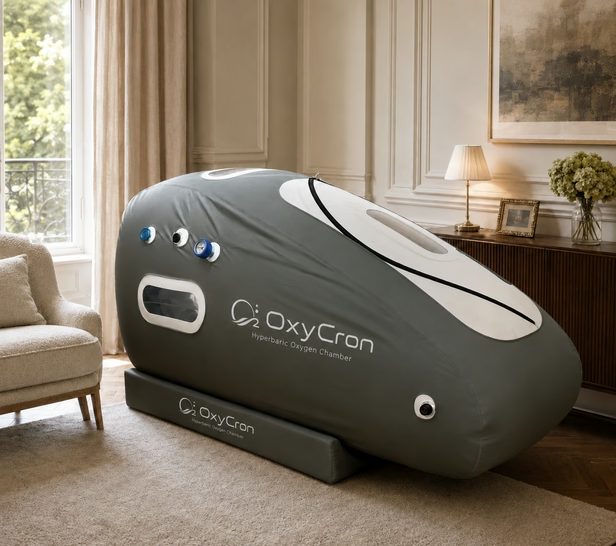
Interest in home hyperbaric chambers has grown alongside the broader home-wellness market. Convenience can be valuable, but moving a pressurized system into a residence also moves daily safety, supervision, maintenance, and emergency responsibilities into that home.
This guide focuses on the decision process rather than promising health outcomes. The first step is to define why the chamber is being considered and whether that use requires a clinician, a prescription, a specific device authorization, or treatment in an accredited facility.
TL;DR: A home hyperbaric chamber should be selected as a pressure system with defined operating requirements—not as a lifestyle appliance. Confirm the exact intended use and legal status, obtain medical guidance, assess room and utility needs, plan supervision and emergency procedures, and verify maintenance, training, warranty, and local support before purchase.
Start with intended use and medical oversight
Hyperbaric oxygen therapy is used clinically for specific conditions under medical supervision. A lower-pressure home chamber may not deliver the same pressure or oxygen exposure and should not be assumed to treat the same conditions. The Undersea and Hyperbaric Medical Society states that mild hyperbaric treatment at low pressures is unproven for general medical use.
Ask a qualified clinician whether hyperbaric treatment is appropriate for the person and goal involved. Do not use a home chamber to self-treat urgent symptoms, replace prescribed care, or delay assessment of a wound, neurologic symptom, breathing problem, infection, or injury.
Check the device and seller
Request the exact model number, intended-use statement, instructions for use, regulatory records for your market, pressure rating, gas configuration, electrical requirements, and full list of accessories. A company name appearing in a regulator database does not mean that every marketing claim has been reviewed.
The seller should explain delivery, installation, user training, cleaning, inspections, maintenance intervals, replacement parts, warranty exclusions, and technical support. Verify who will service the device locally and what happens if a zipper, seal, compressor, valve, gauge, communication system, or oxygen component fails.
Prepare the room and operating plan
A home site assessment should consider clearances, floor capacity, ventilation, temperature and humidity, electrical supply, grounding, access for installation and servicing, noise, pets, children, and an unobstructed exit path. If oxygen is used, the fire-risk assessment becomes even more important. The FDA notes that home medical devices can introduce electrical, fire, environmental, and usability risks that must be planned for.
Decide who will supervise each session, how the user will communicate, how pressure will be released, and how emergency services can reach the room. Keep the manufacturer’s prohibited-items rules visible. Oils, cosmetics, electronic devices, unsuitable fabrics, ignition sources, and static-producing materials may be restricted.
- Written medical screening and a plan for ear or sinus pressure problems.
- A trained adult supervisor present for the full session.
- Documented pre-use checks, cleaning, and maintenance logs.
- A clear emergency depressurization and evacuation procedure.
- Smoke detection, fire precautions, grounding, and prohibited-item control.
- Reliable after-sales service and access to replacement parts.
Calculate the total cost of ownership
Purchase price is only the first cost. Include delivery, site preparation, electrical work, ventilation, oxygen equipment where applicable, training, routine service, calibration, replacement seals or filters, consumables, insurance, and eventual disposal. A low quotation can become expensive if parts or qualified service are unavailable locally.
Compare vendors with the same written checklist and ask them to identify what is included, excluded, and required before first use. Keep all documentation, serial numbers, service records, and incident contacts together.
Frequently asked questions
Can a home chamber be used without supervision?
Unsupervised use is not a sound default. The exact instructions for use govern operation, and a trained adult should be able to monitor the user, communicate, stop the session, depressurize safely, and respond to symptoms or equipment problems.
What is the biggest buying mistake?
Buying from a headline specification or health claim without verifying intended use, operating pressure, oxygen delivery, regulatory status, installation needs, training, maintenance, and local support. Compare complete systems and operating plans, not just chamber prices.
Sources and safety references
- U.S. FDA — Follow Instructions for Safe Use of Hyperbaric Oxygen Therapy Devices (2025)
- U.S. FDA — Hyperbaric chamber product classification (CBF)
- Undersea & Hyperbaric Medical Society — Position statement on low-pressure fabric chambers
- Mayo Clinic — Hyperbaric oxygen therapy: uses and risks
- U.S. FDA — Unique considerations for home-use medical devices
This article is educational and does not replace individualized medical advice, diagnosis, or emergency care.