
How Much Does It Cost to Start a Hyperbaric Chamber Business in 2026?
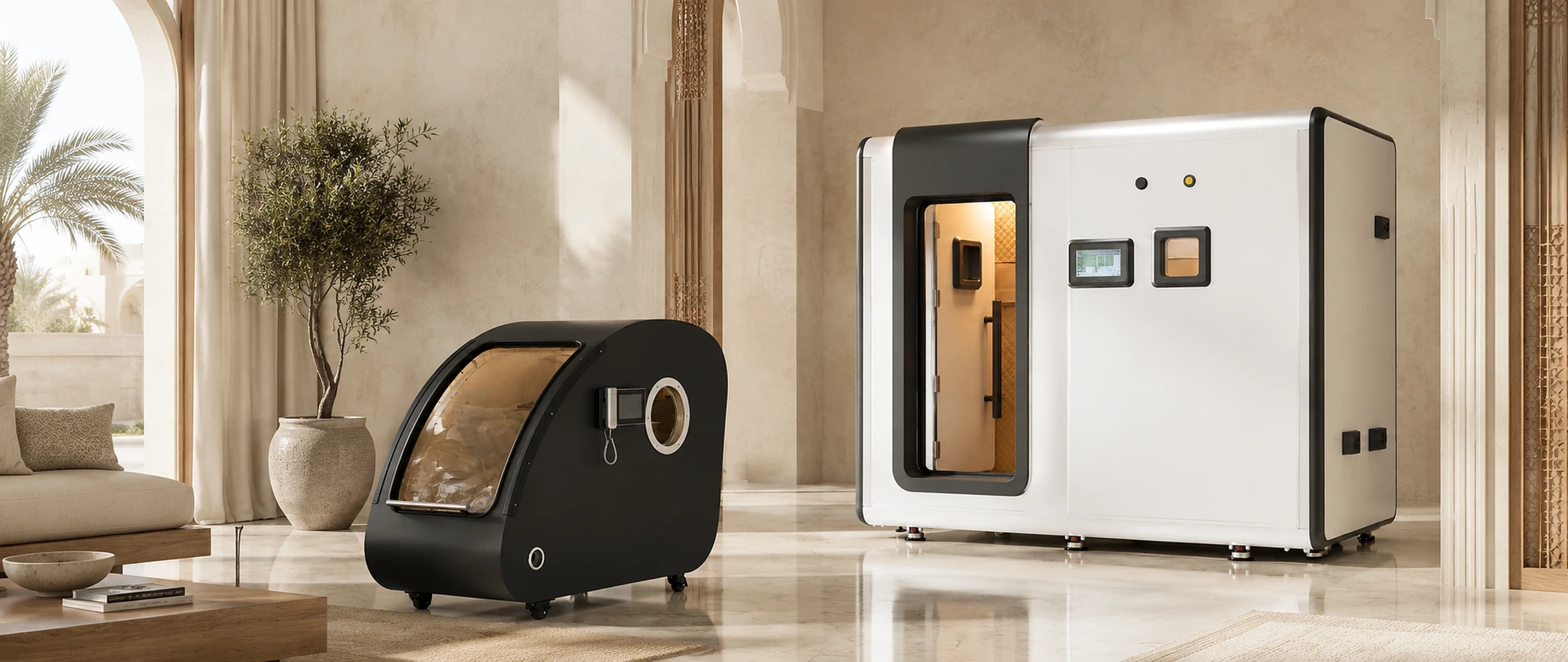
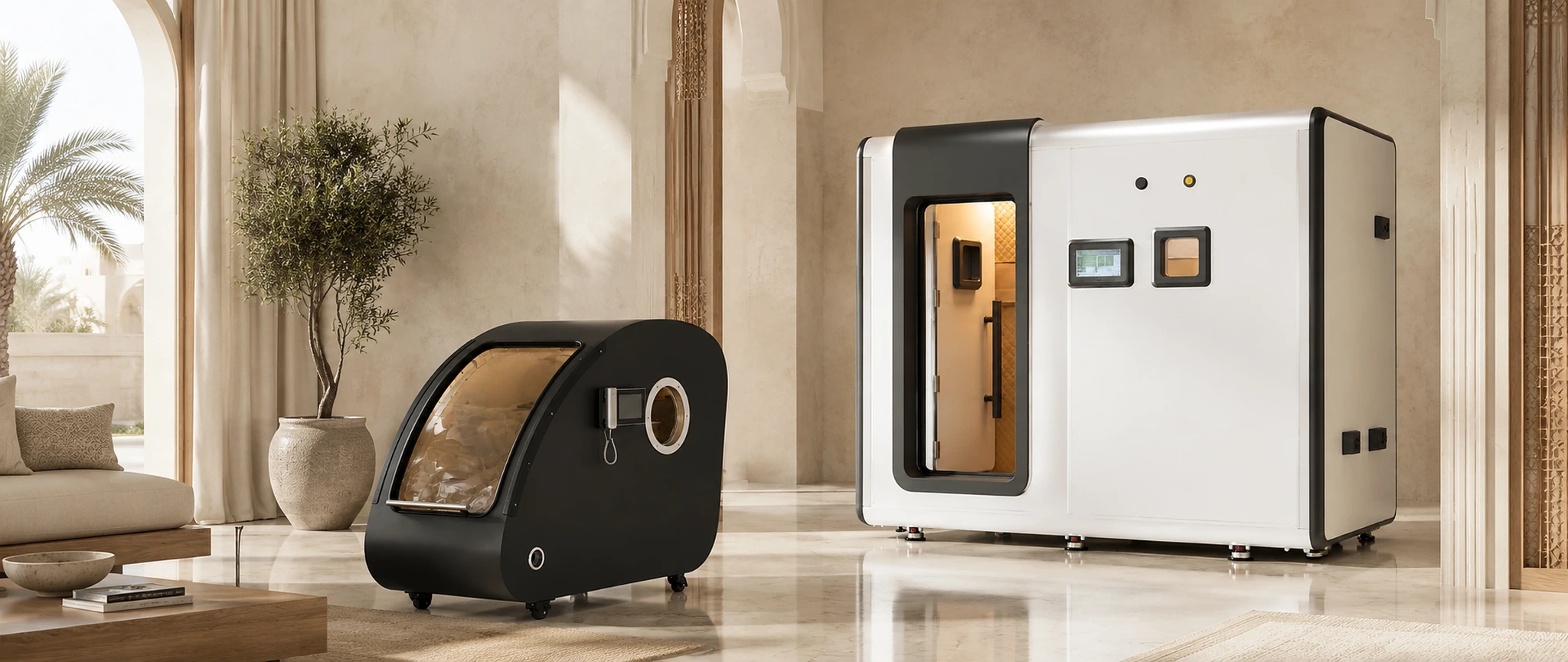
A hyperbaric chamber business can begin with equipment priced from about US$3,500 for a soft-shell system, while hard-shell equipment can range from roughly US$11,000 to US$63,000 before freight, room preparation, training, local approvals and working capital. Those are current indicative Oxycron ranges, not a complete project quote.
The real question is not simply, “How much is a chamber?” It is, “What will it cost to open a safe, compliant, sale-ready service in my market—and how many paid sessions must it deliver?” This guide gives you a practical model for answering that question without hiding important costs or promising unrealistic returns.
TL;DR: Current Oxycron equipment ranges run from US$3,500–6,500 for soft-shell chambers and US$11,000–63,000 for hard-shell chambers. Your full startup budget must also cover freight, site work, safety, training, insurance, compliance, marketing and cash runway. Build the plan around landed cost and contribution per session, not the chamber price alone.
Already comparing equipment? Start with the hyperbaric chambers for sale page, then return here to calculate the complete business case.
How Much Does a Hyperbaric Chamber Business Cost?
Oxycron’s October 2026 indicative ranges place soft-shell chambers at US$3,500–6,500 and hard-shell chambers at US$11,000–63,000. Equipment is only one line in a complete startup budget. The final number changes with destination, chamber configuration, room condition, freight, import costs, training, insurance, staffing and local operating requirements.
| Budget category | What to include | How to price it |
|---|---|---|
| Chamber system | Chamber, compressor, oxygen source, controls, communication, cooling and accessories | Model-specific supplier quote |
| Delivery and import | Export packing, freight, insurance, duty, tax, brokerage, local delivery and rigging | Written Incoterm plus destination quote |
| Room and utilities | Doorway access, floor space, electrical work, ventilation, cooling, finishes and signage | Site survey and local contractor quotes |
| Opening readiness | Training, procedures, cleaning supplies, safety equipment, permits, insurance and professional advice | Local authority and adviser quotes |
| Working capital | Rent, payroll, utilities, marketing, software, maintenance and contingency before stable demand | Monthly forecast multiplied by runway |
Planning insight: use three numbers in your business plan: equipment price, landed opening cost and cash required until break-even. Treating these as the same number is the fastest way to underfund the launch.
Step 1: Define the Business Before Choosing a Chamber
The U.S. Small Business Administration separates startup planning into one-time and monthly expenses, and recommends counting at least one year of monthly costs; it says five years is ideal for a fuller view. That principle applies anywhere: first define the service, customer and operating model, then size the equipment and cash requirement.
- Choose the facility type. Decide whether this is a wellness studio, sports-recovery space, spa, hotel amenity, distributor showroom or clinical service. A clinical model needs qualified medical and regulatory advice from the beginning.
- Define the customer journey. Map booking, screening, consent, preparation, supervision, cleaning, turnover and follow-up.
- Set the commercial unit. Will you sell a single session, package, membership or business-to-business service?
- Confirm permitted claims. Wellness marketing and medical treatment claims are not interchangeable. Check the destination market before naming services or building advertisements.
- Set daily demand assumptions. Use conservative, expected and strong-demand cases rather than one optimistic forecast.
Verify this step by writing a one-page brief that states the destination, facility type, intended use, target customer, operating hours, expected sessions, staffing and planned claims. If those answers are unclear, a supplier cannot recommend a responsible configuration.
Step 2: Choose the Chamber Configuration That Fits the Model
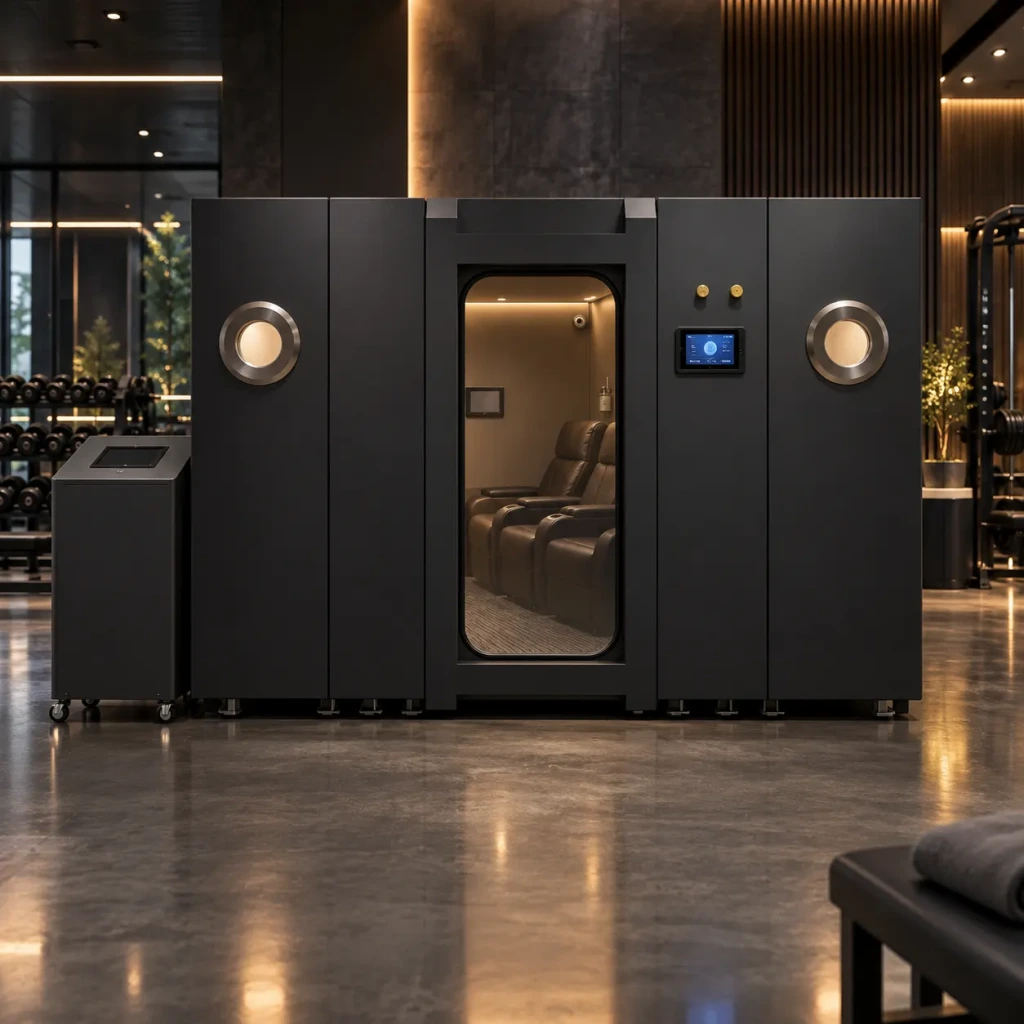
Oxycron’s current range spans soft-shell and hard-shell systems, seated and lying formats, and models from one to four people with configurations reaching 2.0 ATA. That variety matters because capacity, pressure, access, appearance and installation shape both your startup cost and the number of bookable sessions you can offer.
| Decision | Lower-complexity direction | Higher-capacity or premium direction |
|---|---|---|
| Construction | Soft-shell, portable, smaller opening budget | Hard-shell, permanent, premium room presentation |
| User position | Lying model for a simple rest-focused session | Seated or walk-in layout for comfort and access preferences |
| Capacity | One person, simpler booking and privacy | Two to four people, more throughput if demand is proven |
| Pressure | Choose only after intended use and market requirements are clear | Higher-pressure options require an equally serious review of operation, documentation and safety |
Use the soft-shell versus hard-shell buyer’s guide and the 1.5 ATA versus 2.0 ATA comparison to narrow the shortlist. Then verify fit with actual room, doorway, utility and user-flow measurements.
Step 3: Calculate the Landed Startup Cost
ICC guidance says an Incoterms® rule should identify a precise named place because that point affects delivery, risk and cost allocation. A chamber quote marked only “FOB,” “CIF” or “DAP” is incomplete without the location. Your budget should follow the equipment from the factory floor to a ready-to-book room.
Use this formula:
Landed opening cost = equipment + options + export packing + freight + insurance + import charges + local delivery + site work + setup + training + professional fees + opening supplies.
- Ask for packing dimensions and gross weight before requesting freight.
- Write the Incoterm, named place and Incoterms® 2020 into the quotation.
- Confirm who handles customs clearance, duty, tax and destination charges.
- Price local access needs such as a liftgate, forklift, crane, rigging or temporary storage.
- Add room work, utilities, signage, cleaning supplies, safety items and training.
- Keep a separate contingency line instead of hiding it inside the chamber cost.
A useful quotation lets two suppliers be compared line by line. The factory-direct sourcing guide explains how to normalize scope, Incoterms, warranty and support before comparing prices.
Step 4: Plan the Room, Utilities and Safety System
The FDA’s August 2025 safety letter lists six operational priorities for HBOT devices: follow the instructions for use, apply fire-prevention measures, train staff, supervise users, follow cleaning and maintenance schedules, and control prohibited items. In September 2026, FDA’s classification page also listed NFPA 99:2024 and ASME PVHO-1:2023 as recognized consensus standards for Class II hyperbaric chambers.

Before signing a lease or paying a deposit, record:
- Room length, width, height and clear service space
- Door, corridor, elevator and turning dimensions
- Floor loading and final chamber position
- Voltage, frequency, plug, circuit and grounding requirements
- Ventilation, ambient temperature and cooling needs
- Operator sightlines, communication and emergency access
- Cleaning, linen, storage and prohibited-item control
- Fire-safety review and any local inspection requirement
Do not copy another facility’s layout. The chamber model, oxygen arrangement, local code and intended use can change what is required. Use Oxycron’s pre-installation checklist as a question set, then obtain market-specific review.
Step 5: Calculate Capacity and Break-Even Sessions
The SBA defines break-even units as fixed costs ÷ (price per unit − variable cost per unit). For a chamber business, one completed paid session is a practical unit. This model is not a profit promise; it is a stress test that shows whether realistic demand can cover monthly operating costs.
Start with four inputs:
- Average collected price: actual revenue after discounts and refunds
- Variable cost per session: payment fees, consumables, laundry and directly variable labor or utilities
- Monthly fixed cost: rent, base payroll, insurance, software, maintenance reserve, marketing and finance payments
- Practical monthly capacity: operating days × available sessions × expected utilization
Next, test capacity. If one chamber can practically deliver four sessions per day across 26 days, capacity is 104 sessions. The sample break-even point of 67 sessions would require about 64% utilization. If the business depends on 95% utilization from month one, the plan needs more margin, lower fixed cost or stronger pre-launch demand.
Step 6: Verify Compliance, Insurance and Marketing Claims
In the United States, the FDA classifies hyperbaric chambers under product code CBF as Class II devices subject to 510(k) review. In the European Union, the MDR assigns distinct duties to manufacturers, authorised representatives, importers and distributors. Those facts show why a generic certificate or “approved everywhere” claim is not enough.
- Identify whether the planned service is wellness, medical or another regulated category in the destination.
- Confirm the exact legal manufacturer, model, intended use and permitted claims.
- Ask which documents apply to that model and market—not merely to the supplier or another product.
- Check facility, operator, prescription, advertising, import and post-market obligations with qualified local advisers.
- Obtain written insurance confirmation for the equipment, premises, operators and intended service.
ISO says ISO 13485:2016 is a quality-management-system standard for medical-device organizations and was reviewed and confirmed in 2025. It does not replace model-specific market authorization, a complete technical file or the buyer’s local obligations. Ask for certificate scope, issuing body, validity and the exact entity covered.
For a clean distinction between wellness use and clinical treatment, review the wellness chamber versus medical HBOT guide. This article is commercial planning information, not medical, legal, regulatory, tax or investment advice.
Step 7: Send a Supplier Brief That Produces a Comparable Quote
A useful RFQ should contain at least ten project facts: destination, facility type, intended use, room dimensions, access dimensions, capacity, preferred construction, pressure range, electrical supply and delivery target. Adding documentation, training, branding and service needs turns a headline price into a proposal you can actually compare.

Copy this RFQ checklist
- Destination country, city and delivery address or port
- Facility type and intended commercial use
- Room, doorway, corridor and elevator dimensions
- Expected users, daily sessions and capacity
- Soft-shell or hard-shell preference, seated or lying format
- Pressure range and oxygen arrangement to be reviewed
- Voltage, frequency, plug and environmental conditions
- Included compressor, oxygen source, cooling, communication and accessories
- Applicable model and destination-market documents
- Packaging, Incoterm, named place and delivery schedule
- Installation, training, warranty, spare parts and support scope
- Logo, color, language or OEM requirements
After receiving proposals, apply the hyperbaric chamber supplier checklist. Verify the exact model, test records, manuals, labels, serial traceability, pre-shipment acceptance criteria and service responsibilities in writing.
Step 8: Build a 90-Day Launch Plan
The SBA groups startup work into planning, startup-cost calculation, location, licensing, funding and launch. For a chamber project, those workstreams should run together. A 90-day plan is possible only when the equipment lead time, site readiness, local review and staff training fit the same calendar.
| Period | Commercial work | Equipment and operations work |
|---|---|---|
| Days 1–30 | Validate customer, offer, price, demand and permitted claims | Measure site, shortlist configurations, review local requirements and request normalized quotes |
| Days 31–60 | Secure finance, insurance, lease conditions and pre-launch marketing plan | Approve specification, documents, acceptance plan, shipping scope and site work |
| Days 61–90 | Open bookings only when the operating date is credible | Complete delivery, installation, training, procedures, drills and opening checks |
Success is not “the chamber arrived.” A launch-ready project has trained staff, approved procedures, a clean room workflow, a maintenance calendar, written emergency steps, verified documentation, active insurance and enough cash to withstand slower-than-planned demand.
What Mistakes Make a Hyperbaric Chamber Business More Expensive?
The most expensive mistake is comparing unit prices before normalizing scope. A quote that excludes freight, oxygen equipment, cooling, training, spare parts or destination charges can look cheaper while producing a higher landed cost and a later opening date.
Buying before measuring access
A chamber that fits the treatment room may not fit the doorway, elevator or final turn. Measure the entire delivery path and confirm packed and unpacked dimensions.
Modeling revenue at full capacity
Capacity is not demand. Use conservative utilization, allow for cleaning and downtime, and keep the average collected price below the public list price when discounts are likely.
Treating compliance as a certificate folder
Documents must match the exact model, legal manufacturer, intended use and destination. Registration, listing, quality-system certification and product authorization are different concepts.
Waiting until delivery to plan service
Confirm maintenance intervals, remote diagnosis, spare-parts prices, warranty logistics and staff responsibilities before placing the order. Use the maintenance and service guide to build that plan.
Frequently Asked Questions
What is the lowest-cost way to start a hyperbaric chamber business?
A soft-shell pilot usually has the smallest equipment entry point. Oxycron’s October 2026 indicative soft-shell range is US$3,500–6,500. The full opening budget will still include delivery, site readiness, training, insurance, local compliance and working capital. Choose a pilot only if the intended use and local requirements support it.
How much does a commercial hard-shell hyperbaric chamber cost?
Oxycron currently shows an indicative hard-shell equipment range of US$11,000–63,000. Capacity, pressure, interior, controls, cooling, oxygen equipment and customization affect the final price. Ask for a delivered, model-specific quotation rather than budgeting from the lowest catalog number.
How many sessions are needed to break even?
Use the SBA formula: fixed monthly costs divided by contribution per session. In the article’s example, US$9,000 fixed cost divided by US$135 contribution equals 66.7 sessions per month. Replace all three assumptions—price, variable cost and fixed cost—with figures from your own market.
Can a wellness center make medical claims about HBOT?
Do not assume it can. In the United States, FDA classifies hyperbaric chambers as Class II devices under product code CBF, while service, professional and advertising rules may add more obligations. Classification and claims differ by market, intended use and model, so obtain qualified local advice before publishing claims.
What information should I send to get an accurate quote?
Send the destination, facility type, intended use, room and access dimensions, expected capacity, chamber preference, pressure range, electrical supply, required documents, delivery date and support needs. Those ten inputs let a supplier price the system and responsibilities instead of returning an incomplete headline figure.
Turn the Idea Into a Quote-Ready Project
A sound hyperbaric chamber business plan connects five things: the right chamber, a ready site, documented safety, market-specific compliance and achievable session economics. Start with landed cost, test demand against break-even and keep enough runway for a realistic launch.
Ready for a model-specific proposal? Contact Oxycron with your country, facility type, room dimensions, preferred capacity, pressure range and opening target. The team can compare suitable configurations, included equipment, available documents, delivery scope and support.
Disclosure: Equipment prices are indicative ranges published by Oxycron and may change with configuration, options, currency, destination and support scope. The financial example is illustrative only and is not an earnings forecast. This article is general commercial purchasing information, not medical, legal, regulatory, tax or financial advice.
Sources
- Oxycron: Hyperbaric Chambers for Sale — indicative equipment price ranges and configuration context
- U.S. Small Business Administration: Plan Your Business — startup-cost categories and break-even formula
- FDA: Follow Instructions for Safe Use of HBOT Devices — safety, training, monitoring, cleaning and maintenance
- FDA: Hyperbaric Chamber Product Classification — Class II, product code CBF and recognized standards
- ISO 13485:2016 — medical-device quality-management-system scope
- European Commission: Medical Device Economic Operators — manufacturer, representative, importer and distributor responsibilities
- ICC: Incoterms® 2020 Q&A — named place, delivery, risk and cost allocation
- ASME PVHO-1:2023 — pressure vessels for human occupancy, including hyperbaric chambers