
Hyperbaric Chamber Maintenance Cost: What Does It Cost to Own One in 2026?
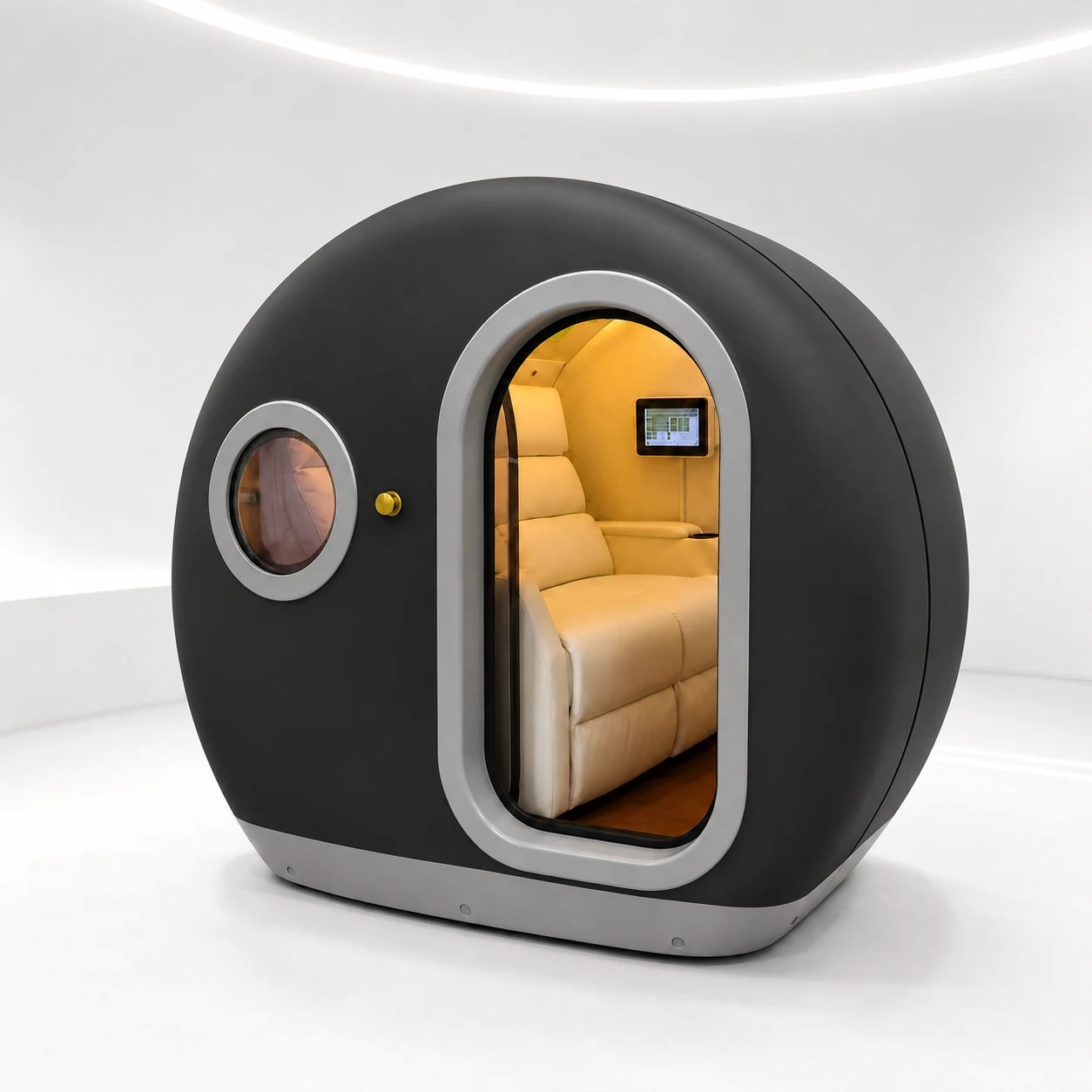
Buying a hyperbaric chamber is only the first ownership decision. Filters, compressor hours, oxygen equipment, electricity, technician access, spare parts, warranty limits, and downtime all shape the real cost. A soft-shell home setup and a hard-shell commercial chamber can have very different maintenance profiles, even when both are described as “one chamber.”
This 2026 guide separates published market estimates from Oxycron-specific information. It does not invent an Oxycron maintenance price. For an exact Oxycron scope, the model, configuration, destination, usage, and service requirements must be confirmed in a quotation and the applicable product documentation. For background, see Oxycron’s hyperbaric chamber cost buyer’s guide and maintenance service guide.
TL;DR: Public supplier estimates commonly place soft-shell maintenance around $300–$800 per year and hard-shell maintenance around $1,500–$6,000, before unusual repairs, local labor, taxes, and downtime. Treat those figures as market estimates, not Oxycron prices. Build your own budget from usage, consumables, compressor and oxygen-system service, electricity, support, spare parts, and a contingency reserve.
What is included in hyperbaric chamber ownership cost?
There is no universal annual price because “maintenance” can mean cleaning, a filter change, a scheduled inspection, a compressor overhaul, a pressure-system test, or an emergency repair. The FDA’s 2025 safety communication tells facilities to follow the manufacturer’s cleaning procedures, maintenance intervals, safety checks, training, supervision, grounding, and fire-prevention controls (FDA, 2025).
Use five cost buckets:
- Routine care: cleaning, visual checks, logkeeping, seal or zipper care, and operator time.
- Consumables: air filters, oxygen-concentrator filters, approved cleaning products, masks, hoses, gaskets, and other wear items.
- Technical service: compressor service, oxygen-system checks, calibration, functional tests, and qualified inspections.
- Utilities and support: electricity, ventilation or cooling, remote support, travel, shipping, and training.
- Risk costs: spare-parts inventory, emergency repair, canceled sessions, and planned lifecycle work.
The purchase price is therefore only one line in a total-cost-of-ownership model. See Oxycron’s pre-installation checklist for room access, power, ventilation, delivery, and setup planning.
How much does hyperbaric chamber maintenance cost in 2026?
Published 2026 supplier and industry pages commonly quote about $300–$800 per year for soft-shell systems and about $1,500–$6,000 per year for hard-shell systems. One supplier page also describes compressor work as roughly 40–60% of upkeep in its market comparison. These are published commercial estimates, not an industry tariff, independent survey, or Oxycron quotation (Superhuman Chambers, accessed October 2026).
Those ranges should be used as planning signals, not promises. A lightly used home system with owner-performed cleaning may sit near the lower end. A commercial hard-shell chamber with scheduled technician visits, calibration, travel, high session volume, and a parts reserve may exceed the upper end. Major repairs and lifecycle overhauls should be budgeted separately.
| Cost layer | Home soft-shell planning question | Commercial hard-shell planning question |
|---|---|---|
| Routine care | Who cleans and records each session? | Is staff time included in the operating model? |
| Filters and consumables | How often do dust, humidity, and usage load filters? | Are approved parts stocked locally? |
| Compressor | What are the operating hours and service triggers? | What happens if the compressor fails during booked sessions? |
| Oxygen system | Is a concentrator included or optional? | Who checks oxygen delivery, alarms, and documentation? |
| Technical service | Is remote support enough for this configuration? | What are response time, travel, calibration, and labor terms? |
| Risk reserve | Can the owner pause use for a repair? | What is the cost of downtime and canceled appointments? |
What does routine maintenance include?
Routine maintenance is usually the most predictable layer, but it is not merely housekeeping. Oxycron’s existing service guide recommends separating operator inspection, cleaning, preventive maintenance, qualified service, and post-event assessment. The FDA likewise emphasizes manufacturer-recommended cleaning and maintenance intervals (Oxycron service guide; FDA, 2025).
Typical routine tasks include:
- checking closures, seams, doors, seals, windows, hoses, fittings, gauges, communication, alarms, and power;
- cleaning only with products approved for the exact fabric, acrylic, seals, coatings, and accessories;
- recording session hours or cycles when the manual uses them as service triggers;
- documenting abnormal noise, slow pressurization, condensation, odor, leaks, repeated alarms, or visible damage; and
- removing the chamber from service when a safety-critical condition needs evaluation.
The direct supply cost may be modest. The hidden cost is operator time and the cost of skipping a check. A ten-minute inspection that identifies a deteriorating seal can be cheaper than an emergency call, a damaged component, or a canceled commercial schedule.
Filters and consumables: the recurring line items
Public cost guides commonly cite air-filter sets around $20–$100 and oxygen-concentrator filters around $50–$200, with actual replacement intervals depending on the model and environment (Hyperbaric Oxygen Hub, accessed October 2026). These figures are third-party market estimates, not Oxycron prices.
The correct budget needs a model-specific parts list. Ask which items are washable, which are disposable, their shelf life, storage conditions, approved part numbers, and whether replacement requires a trained technician. Common categories include compressor intake filters, oxygen-concentrator particle or bacterial filters, moisture-control media, masks, tubing, seals, gaskets, approved lubricants, and cleaning supplies.
Do not substitute a generic filter simply because it fits. A restriction, contamination issue, incompatible material, or unverified pressure rating can create a safety or performance problem. For an international buyer, add shipping, customs, minimum order quantities, and the time needed to identify the right part.
Compressor maintenance is often the largest variable
The compressor affects both reliability and operating cost because it accumulates hours whenever the system pressurizes or supplies air. A published commercial maintenance comparison identifies the compressor as roughly 40–60% of total upkeep in its own market model; this is a supplier estimate, not a universal ratio (Superhuman Chambers).
Budget for the compressor’s intake filtration, moisture control, oil or oil-free service requirements, cooling, vibration, noise, hoses, fittings, and qualified inspection. The service trigger may be calendar-based, hour-based, cycle-based, or condition-based. Use whichever trigger the manufacturer specifies first.
For commercial use, compressor downtime has a second cost: lost appointment capacity. A spare filter may cost little, but an unavailable compressor can stop every session. Ask the supplier whether a backup compressor, loaner, or emergency shipping option is appropriate for your workload.
Oxygen concentrator maintenance and oxygen-source costs
An oxygen concentrator is a separate asset with its own filters, sieve beds, airflow, purity, alarms, cooling, and service requirements. If the chamber uses an optional PSA system, confirm its rated power, operating environment, service intervals, and whether the oxygen system is included in the quotation or priced separately.
Oxycron product pages show that specifications vary by model and configuration. For example, the OXY-V20 page lists an optional PSA oxygen system rated at 850 W, with 10 L/min oxygen flow; that is a product specification, not an annual maintenance price (OXY-V20). Use the exact ordered configuration when estimating electricity and service.
Do not treat oxygen delivery as a generic accessory. Include purity or output verification where required, approved tubing and masks, filter replacement, alarms, and a clear escalation path. Medical or regulated use may also involve additional professional and local requirements.
How much electricity does a chamber use?
Electricity cost is calculated from actual power draw, operating time, local tariff, and duty cycle—not from ATA alone. Use this formula:
Electricity cost = kW × operating hours × electricity price per kWh.
For illustration only, if an 850 W oxygen system ran for one hour, 300 times per year, at $0.20/kWh, the energy cost would be 0.85 × 300 × $0.20 = $51. That example uses the published OXY-V20 optional PSA rating and excludes the compressor, controls, room cooling, standby load, taxes, and demand charges. It is not an Oxycron ownership estimate.
Measure or obtain the power rating for every powered component. A commercial site may also pay for ventilation, air conditioning, lighting, networking, and standby equipment. In a warm room, heat rejected by compressors and oxygen systems can increase cooling demand.
Hard-shell vs. soft-shell maintenance
Soft-shell systems often have fewer rigid pressure-boundary components but more exposure to fabric, seams, zippers, windows, closures, hoses, and handling damage. Hard-shell systems typically require more attention to doors, interlocks, seals, acrylic viewports, valves, gauges, pressure components, controls, and service access. The maintenance burden depends on design, not just the word “hard” or “soft.”
| Ownership factor | Soft-shell | Hard-shell |
|---|---|---|
| Common wear points | Fabric, seams, zipper or closure, window, hoses | Door, seals, viewport, valves, controls, pressure components |
| Site profile | Often easier to move or install | Usually a heavier, more permanent installation |
| Technical service | Still needs model-specific checks | Often needs more formal inspection and specialist access |
| Usage sensitivity | Heavy handling and frequent cycles can accelerate wear | High session volume increases hours, heat, and downtime exposure |
| Budget pattern | Lower published routine range, but replacement fabric or closure can be material | Higher service, calibration, travel, and lifecycle exposure |
This is a planning comparison, not a safety classification. The exact manual, applicable standard, destination rules, and qualified service provider control the maintenance decision. See Oxycron’s soft-shell versus hard-shell comparison guide for construction and use-case differences.
Home use versus commercial use
Home ownership often has fewer annual sessions, no booked revenue, and more flexibility to wait for a part. The owner may perform approved cleaning and visual checks, but should not perform pressure-boundary, electrical, calibration, or other restricted work without authorization.
Commercial ownership adds staff training, session records, continuous supervision, insurance and local compliance work, scheduled service, spare-parts stocking, customer communication, and the financial cost of downtime. The same filter or seal can therefore create a larger business cost when a chamber is used many times each day.
Before accepting a commercial quote, ask for installation requirements, training scope, maintenance intervals, service response, travel charges, calibration, parts, exclusions, emergency support, and the release-to-service process. Oxycron’s buyer checklist is a useful starting point.
Spare parts, warranty, and service
Spare-parts cost is only part of the risk. Lead time, international freight, customs, technician availability, and whether the part is model-specific can dominate the final impact. Stock predictable wear items only after confirming the exact part number, storage life, and installation requirements.
Oxycron’s published Warranty & After-Sales Support page states that the standard warranty is generally 12 months, unless the quotation, pro forma invoice, or sales agreement says otherwise. It lists major functional components among typical coverage, while normal wear, consumables, unsuitable operating conditions, unstable power, unauthorized modification, incorrect installation, and unauthorized third-party repair are listed exclusions. The page also describes remote technical support, paid post-warranty parts, and international spare-parts support. Treat the signed sales documents as controlling.
That page says transport damage should be reported within 7 days with packaging photos, damage photos or video, delivery records, and serial information. This is Oxycron-specific published policy information, not a promise about every project. Confirm the current terms before purchase.
A practical annual ownership-cost model
Use this worksheet instead of applying a single percentage to the purchase price:
Annual ownership cost = routine supplies + filters and consumables + compressor service + oxygen-system service + electricity + qualified service + spare-parts reserve + downtime or contingency.
Build three scenarios:
- Low-use home: fewer sessions, owner-performed approved routine care, remote support, and a modest parts reserve.
- Regular home or studio: recurring filters, more compressor hours, scheduled technical review, and measured utility cost.
- Commercial center: high cycle count, staff labor, scheduled inspections, calibration, travel, local spare stock, backup planning, and downtime exposure.
Do not hide lifecycle events inside the “average” year. If a manufacturer specifies a major overhaul or component replacement at a future hour, cycle, or calendar milestone, divide the expected cost by the years remaining and add a lifecycle reserve. The final number remains a planning estimate until the exact model and service scope are known.
What increases maintenance cost?
The largest cost drivers are usually:
- high session frequency, long sessions, and many pressure cycles;
- dust, humidity, heat, pet hair, poor ventilation, or unsuitable cleaning chemicals;
- hard-to-reach installation, international shipping, customs, or scarce local technicians;
- mixed equipment from different suppliers and unverified replacement parts;
- deferred filter, seal, compressor, oxygen-system, calibration, or inspection work;
- older equipment, undocumented modifications, or incomplete service history;
- commercial downtime, canceled bookings, and the need for backup capacity; and
- a warranty that excludes the part, labor, travel, or failure mechanism you assumed it covered.
The cheapest ownership plan is usually the one that makes service triggers, parts, records, and escalation clear before the first session. For a commercial buyer, the best comparison is not “Which chamber has the lowest maintenance line?” It is “Which configuration gives us the lowest cost per available, compliant session after service and downtime are included?”
Frequently asked questions
What is the average annual maintenance cost of a hyperbaric chamber?
Public supplier estimates commonly cite $300–$800 annually for soft-shell systems and $1,500–$6,000 for hard-shell systems. These are market estimates, not a universal average or Oxycron price. Usage, service location, compressor hours, oxygen equipment, parts, labor, and lifecycle work can move the actual total materially.
Does a soft-shell chamber cost less to maintain than a hard-shell chamber?
Often, published estimates are lower for soft-shell systems, but the design and workload matter more than the label. Soft chambers still have fabric, closure, hose, filter, and oxygen-system wear. Hard-shell units may add heavier service, calibration, access, and lifecycle requirements. Compare the exact model’s manual and service scope.
How often should filters be replaced?
There is no safe universal interval. Public guides cite ranges from several months to 6–12 months for different filter types, but dust, humidity, operating hours, and the manufacturer’s instructions control. Ask for the exact part number, service trigger, approved substitute policy, and whether a technician must install it.
Is electricity a major ownership cost?
It can be meaningful in high-use commercial settings, but it must be calculated from measured power and hours. Multiply kW by annual operating hours and the local kWh tariff. Include compressor, oxygen system, cooling, ventilation, and standby loads. A published 850 W OXY-V20 PSA rating is a component specification, not a whole-system annual cost.
What should I ask Oxycron for before buying?
Request the exact configuration, model-specific maintenance schedule, consumables and spare-parts list, service triggers, installation and utility requirements, training scope, warranty exclusions, support response, travel and labor terms, and any lifecycle inspection requirements. Ask for the final scope in the quotation or sales agreement.
Conclusion
In 2026, a realistic hyperbaric chamber ownership budget is a model, not a single price. Start with the exact chamber and usage. Add routine care, filters, compressor and oxygen-system service, electricity, qualified technical support, spare parts, and a downtime reserve. Keep public estimates separate from Oxycron-specific terms, and confirm every Oxycron cost in the quotation and applicable documentation.
For an Oxycron project, send the intended setting, country, model preference, session volume, voltage, oxygen configuration, and service capability when requesting a quotation. Use the hyperbaric chambers for sale page for configuration research and the contact page for a model-specific ownership discussion.
Sources and method
- FDA, “Letter to Health Care Providers: Follow Instructions for Safe Use of Hyperbaric Oxygen Therapy Devices,” 2025: https://www.fda.gov/medical-devices/letters-health-care-providers/follow-instructions-safe-use-hyperbaric-oxygen-therapy-devices-letter-health-care-providers
- UHMS, “Indications for Hyperbaric Oxygen Therapy”: https://www.uhms.org/resources/featured-resources/hbo-indications.html
- Oxycron, “Hyperbaric Chamber Maintenance: A Practical Service Guide”: https://oxycron.com/blog/2026/09/09/hyperbaric-chamber-maintenance-service-guide/
- Oxycron, “Warranty & After-Sales Support”: https://oxycron.com/return-refund-policy/
- Oxycron, OXY-V20 product data: https://oxycron.com/product/oxy-v20/
- Market estimate pages reviewed in the October 2026 SERP: Superhuman Chambers, BaroServ, and Hyperbaric Oxygen Hub. Their figures are labeled as supplier or market estimates throughout this draft.