
10L vs 15L vs 20L Oxygen Concentrators for Hyperbaric Chambers
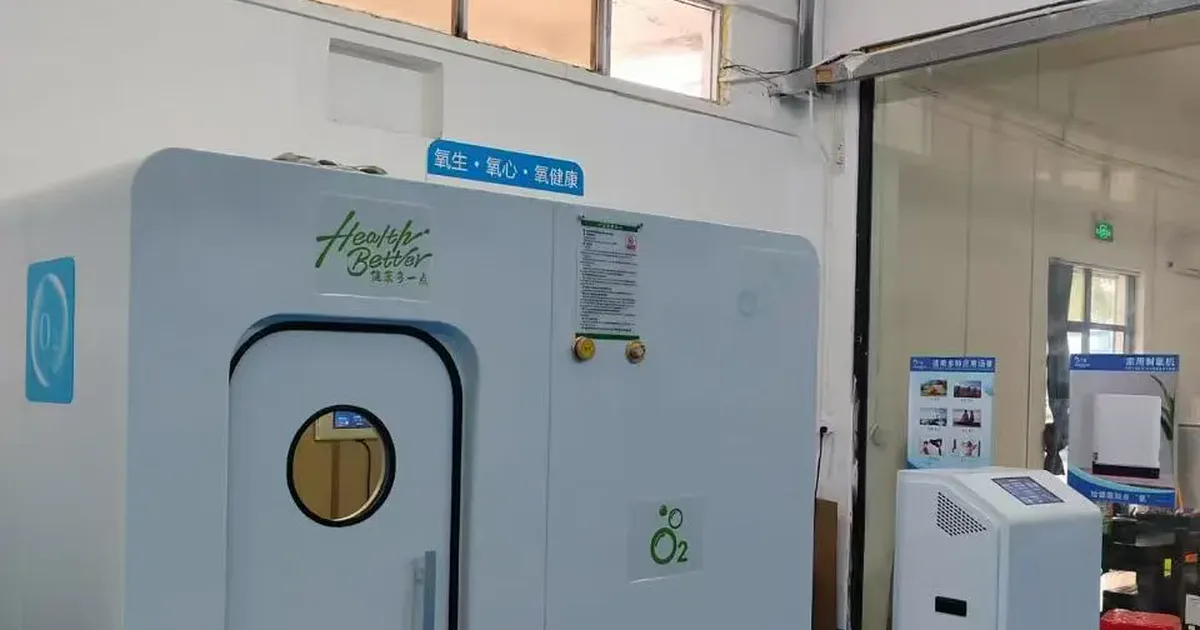
Put the three machines side by side and one difference is obvious before anyone reads a specification sheet. The 10 L/min unit shown beside the chamber is a compact, wheeled machine. The 15 L/min units take up more room. The 20 L/min model is a tall cabinet that needs deliberate planning for power, ventilation and service access.
What the photographs do not show is a simple good-better-best ladder. A 20 L/min oxygen concentrator is not automatically a better purchase than a 10 L/min unit. It serves a different gas demand. For a buyer, the real job is to match the concentrator to the chamber, the number of breathing outlets and the way oxygen is delivered.
That means reading more than the large L/min figure on a quotation. Oxygen concentration at rated flow, outlet pressure, continuous operating requirements, accessories and local electrical supply all belong in the same decision.
In brief: Current Oxycron specifications pair 10 L/min systems with several single-user chambers, 15 L/min systems with several two-person models and a 20 L/min PSA system with the four-person OXY-M15 Quad. Treat that as a product-specific pattern, not a universal sizing rule.
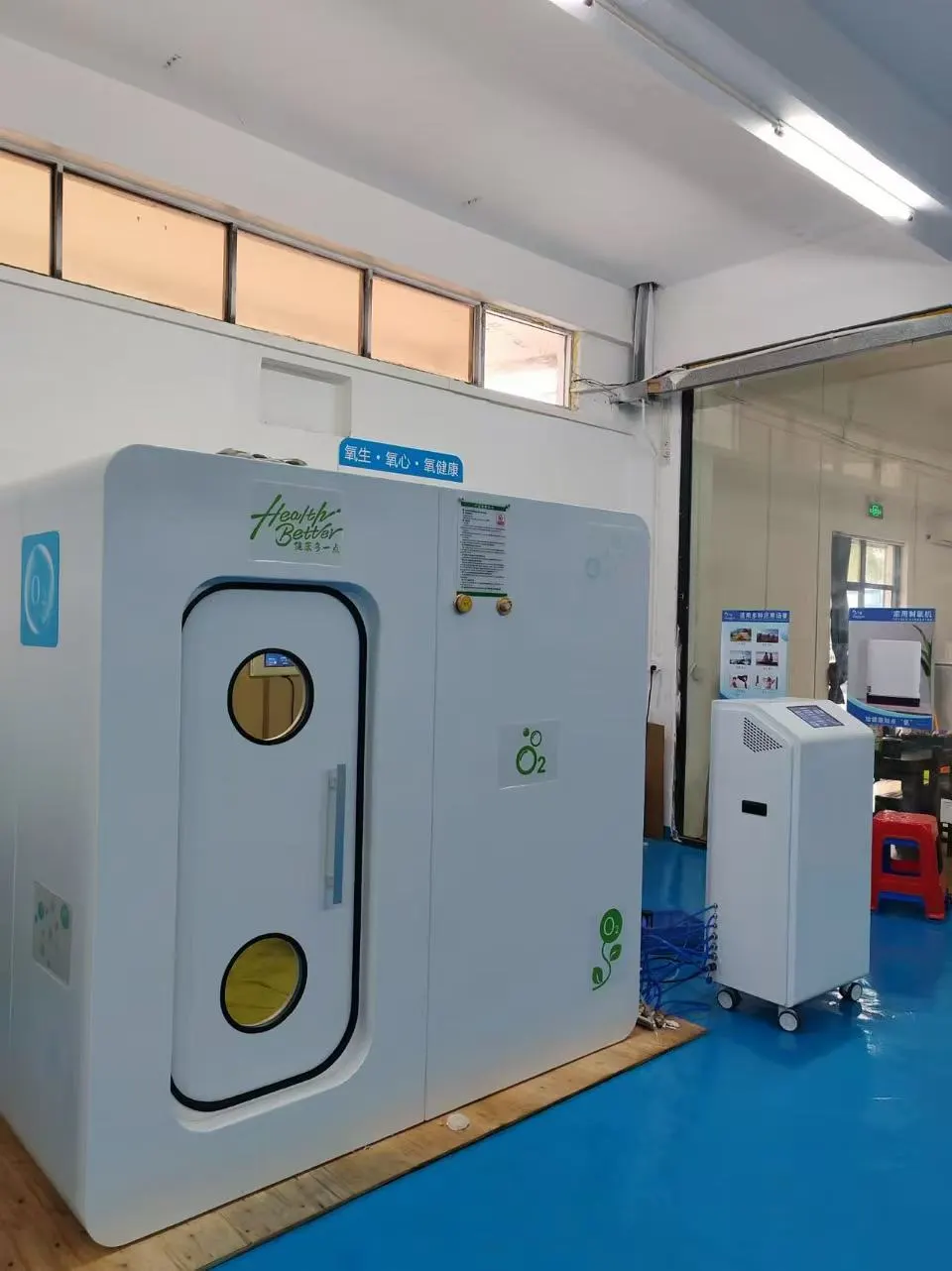
What is the oxygen concentrator doing in the system?
An oxygen concentrator draws in room air and separates much of the nitrogen, producing an oxygen-enriched gas stream. The World Health Organization describes stationary concentrators as electrically powered devices that provide continuous oxygen flow; many conventional units deliver up to 10 L/min (WHO, 2015).
That definition concerns the oxygen source. It does not tell us how the chamber itself is pressurized.
In many air-pressurized chamber systems, compressed air raises the chamber pressure while a separate line carries oxygen-enriched gas to a mask or another approved breathing interface. Other systems may be designed differently. A proper quotation should therefore identify both gases: what pressurizes the chamber and what reaches the user’s breathing interface.
This distinction matters when sales material mentions “oxygen purity.” A reading taken at the concentrator outlet is not automatically the oxygen concentration everywhere inside the chamber. Hose length, connections, flow setting and the breathing interface all sit between the source and the user.
Chamber pressure is another separate specification. Choosing between a 1.5 ATA and a 2.0 ATA system involves far more than changing the concentrator. If that decision is still open, read the 1.5 ATA vs 2.0 ATA buyer’s guide and the soft-shell vs hard-shell comparison first.
Why doesn’t a larger L/min figure settle the choice?
L/min is a flow rate: the volume of gas the unit is rated to supply over time. It says nothing, on its own, about oxygen concentration at that flow or the pressure available once the gas passes through the approved tubing and interface.
Consider a single-user chamber that was designed and documented around a 10 L/min continuous-flow concentrator. Replacing it with a physically larger unit may add power consumption, heat and noise without improving the user’s actual breathing-gas supply. The opposite mistake is more serious: splitting an undersized source between two users because the connectors happen to fit.
The delivery mode must also be clear. WHO technical guidance distinguishes continuous-flow stationary concentrators from many portable devices that use pulse-dose delivery. A “10” on a pulse-dose setting is not the same thing as 10 L/min continuous flow (WHO technical specification, 2015).
Before comparing machines, pin down the operating case:
- the exact chamber model and pressure class;
- one user or simultaneous users;
- required continuous flow and inlet pressure;
- oxygen concentration at the stated flow;
- the approved mask, manifold, tubing and connectors;
- daily schedule and room conditions.
Once those points are fixed, the flow figure becomes useful. Before that, it is mostly a headline number.
How are 10L, 15L and 20L used in the current Oxycron range?
The current product pages show a practical pattern. Several single-user chambers list a 10 L/min option. A group of two-person models lists 15 L/min. The larger OXY-M15 Quad lists an optional 20 L/min PSA system.
| Published flow | Current product examples | Published configuration | Published power examples | Planning implication |
|---|---|---|---|---|
| 10 L/min | OXY-V20, OXY-H10 Compact, OXY-H10 Plus, OXY-RE01 | Mainly single-user models | 850 W on several hard-shell configurations | Compact single-user pairing, subject to the exact chamber and interface |
| 15 L/min | OXY-A20 Duo, OXY-L15 Duo, OXY-P20 Duo, OXY-30 Duo | Several two-person models | 1,100 W on several configurations | More system capacity for specified dual-user arrangements |
| 20 L/min | OXY-M15 Quad | Four-person model | 1,600 W on the published configuration | Larger floor-space, power and ventilation requirement |
This is not a formula that can be carried over to every manufacturer or even every future Oxycron configuration. Options vary by destination market and project. The binding reference is the final technical sheet and model-specific quotation.
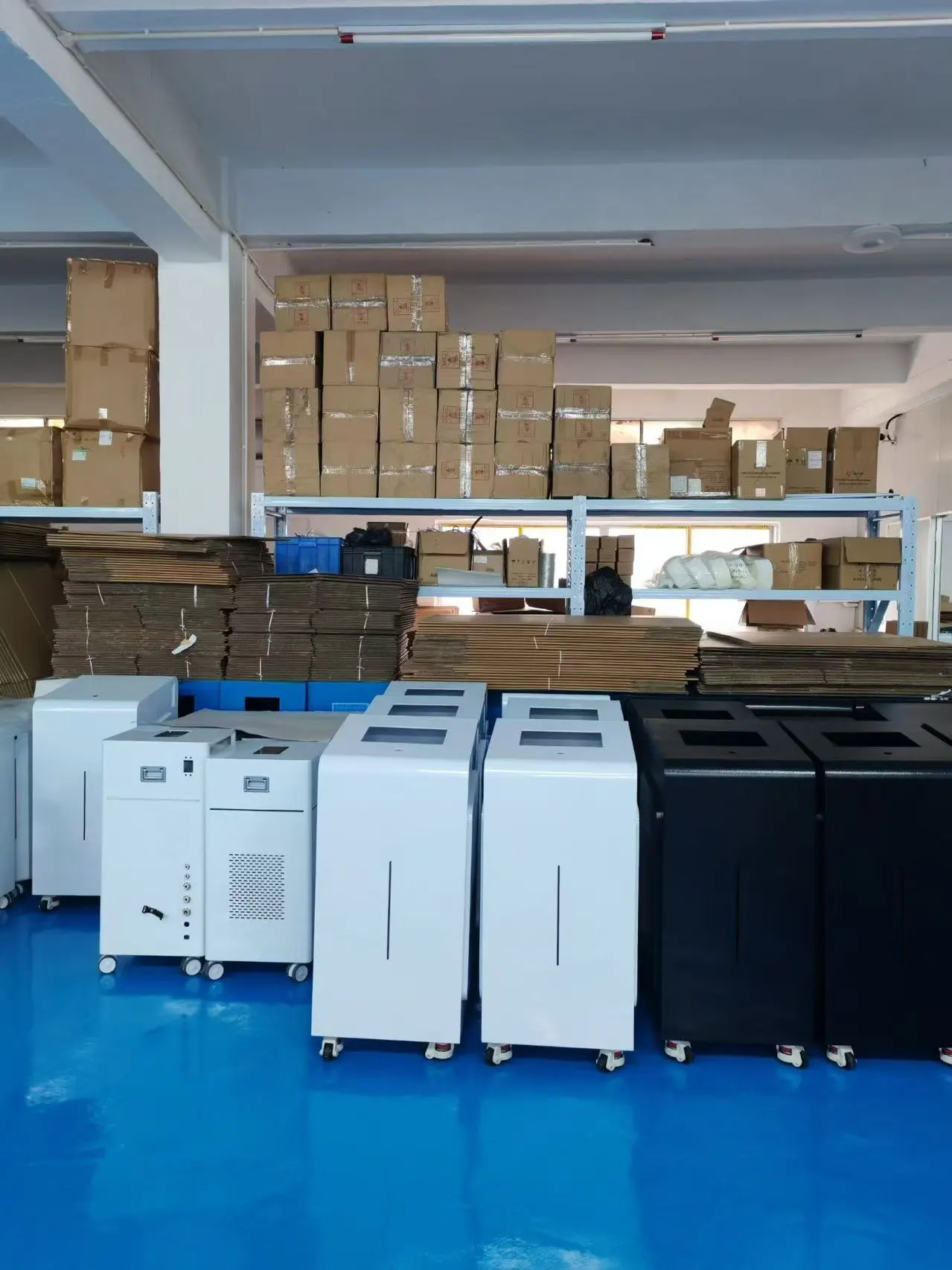
There is a useful purchasing lesson in that table. Moving from 10 to 15 or 20 L/min is not like moving from a standard trim level to a luxury trim level. It changes the installation as well as the nominal gas output.
Why is a purity claim incomplete without its rated flow?
A line that reads “93% oxygen” still leaves an important question unanswered: at what flow was that concentration measured?
Oxygen concentration can vary with flow, operating environment and the condition of the machine. That is why the flow and purity figures must appear together. The current OXY-RE01 page, for example, states 10 L/min and an oxygen concentration range of 90%–97%. The OXY-P20 Duo page states 15 L/min and 93% ±3%. Those figures are more informative than an unqualified claim such as “high-purity oxygen.”
WHO procurement guidance has used more than 82% as a baseline for some concentrator specifications, with more than 90% preferred. WHO also describes oxygen produced by larger PSA plants as 93% ±3% (WHO oxygen resources). These references help readers understand the terminology. They do not make different devices interchangeable.
For the unit being quoted, ask the supplier to state:
- concentration range at maximum rated flow;
- tolerance and measurement method;
- warm-up time before the output reaches specification;
- low-concentration alarm threshold;
- permitted temperature, humidity and altitude;
- maintenance intervals for filters, sieve beds and sensors.
Keep the measurement points straight too. Concentration at the machine outlet, in the delivery hose and at the breathing interface are related readings, but they are not necessarily identical.
Why do pressure, tubing and masks belong in the specification?
Imagine testing a concentrator with nothing attached to its outlet. The indicated flow may look fine. Add a long hose, a manifold, valves and two masks, and the machine now has to deliver against resistance. This is where outlet pressure becomes relevant.
Two concentrators carrying the same 10 L/min label can have different outlet-pressure limits, alarm behaviour and approved accessory arrangements. They should not be treated as drop-in replacements simply because the nominal flow matches.
ISO 80601-2-69:2026 covers basic safety and essential performance for oxygen concentrator equipment. Its scope also includes manufacturer-intended accessories that can affect safety or essential performance—items such as masks, cannulae, extension tubing, humidifiers and external power supplies (ISO, 2026).
For a chamber project, the supplier should be able to show the full gas path: source, approved connections, breathing outlets and exhaust route. An improvised splitter or adapter is not a substitute for that engineering information.
What should be written into the quotation?
“Oxygen generator included” is not enough detail to verify an order. Before a deposit is paid, the quotation or its attached technical sheet should identify the actual equipment:
- concentrator manufacturer and model;
- continuous rated flow;
- oxygen concentration range at that flow;
- rated outlet pressure and any permitted adjustment range;
- number of simultaneous breathing outlets;
- delivery method and included interfaces;
- voltage, frequency, rated power and plug type;
- sound and ventilation information, if available;
- operating temperature, humidity and altitude limits;
- alarm functions;
- filters, sensors, sieve-bed service and preventive-maintenance schedule;
- spare parts, warranty and technical-support contact;
- documents applicable in the destination market;
- commissioning and acceptance procedure.
Specifications often arrive in several places—the chamber brochure, the concentrator label and an accessory list. Put them into one comparison sheet. It is much easier to spot a missing pressure value or mismatched model number there than after the equipment arrives.
Certificates also need to name the model and manufacturer being supplied. A certificate for a similar-looking unit does not validate the ordered one. The hyperbaric chamber supplier checklist covers the wider document review.
What needs checking when the equipment reaches the site?
Handover is the point at which a paper specification becomes a working installation. Record the chamber, concentrator and accessory model numbers and serial numbers. Confirm the approved hose and interface arrangement. Then follow the manufacturer’s procedure for basic performance and alarm checks under the room conditions in which the system will be used.
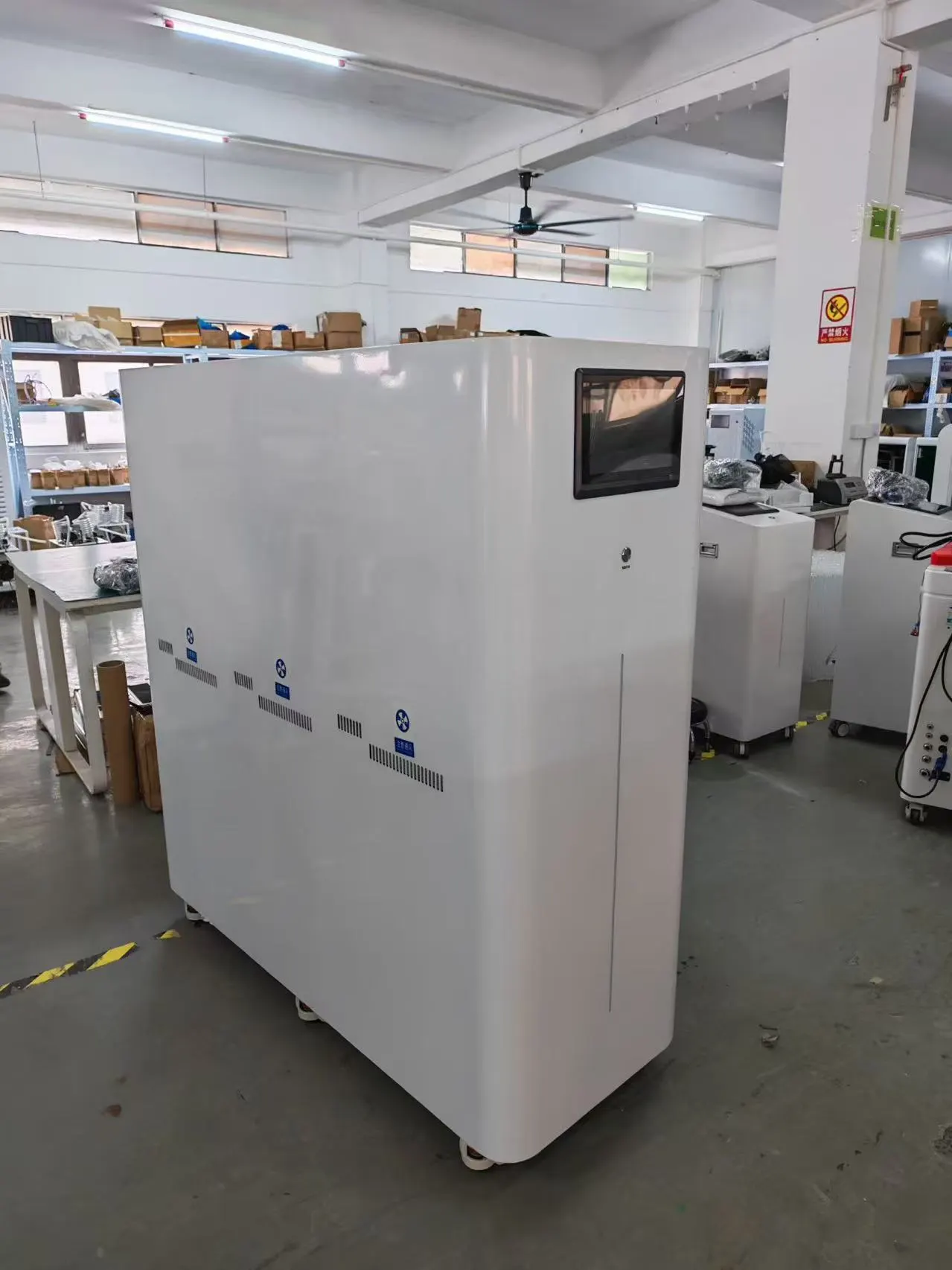
Leave clearance around air inlets and exhausts. Check that the electrical supply matches the ordered voltage and frequency. Hoses should be protected from kinks and damage; cables should not create a trip route. Staff also need to recognise each alarm and know the response specified by the manufacturer.
The FDA’s 2025 safety communication on hyperbaric oxygen therapy devices tells facilities to follow manufacturer instructions, train staff, monitor users, perform specified cleaning and maintenance, provide proper grounding and enforce fire-prevention controls. It also warns that high oxygen concentrations increase fire risk (FDA, 2025).
For that reason, the oxygen source cannot be planned as an accessory tucked wherever space remains. It belongs in the room plan alongside ventilation, power, grounding, service access and emergency procedures. The pre-installation checklist is a useful starting point before shipment.
Five shortcuts that lead to poor buying decisions
“We’ll buy the largest flow and be safe.” Oversizing can add heat, noise, cost and power demand. It does not correct a mismatch elsewhere in the system.
“The brochure says 93%, so purity is settled.” Not unless the document states the flow and conditions associated with that reading.
“A portable unit has the same number on its display.” Pulse-dose settings and continuous L/min ratings are different. Compare the delivery mode, not just the numeral.
“The open-outlet flow looks right.” The complete gas path adds resistance. Outlet pressure and approved accessories still need checking.
“Every component has its own certificate.” Individually documented parts do not automatically form a compatible chamber system. The exact combination needs to be specified by the manufacturer.
Questions buyers often ask
Is a 20L oxygen concentrator better than a 10L unit?
Not by default. It provides more nominal flow, but it also tends to need more floor space, electrical power and ventilation. The right unit is the one documented for the chamber model, number of simultaneous users and breathing interface.
What size concentrator is normally used for a single-person chamber?
Several current Oxycron single-user models list a 10 L/min option. That is evidence about those products, not a rule for every chamber. Confirm flow, purity at that flow, outlet pressure and the approved interface for the exact model being purchased.
Does 10 L/min mean 10 litres of pure oxygen enter the chamber each minute?
No. It is a nominal gas-flow rating, not a promise of 100% oxygen and not a measurement of the atmosphere throughout the chamber. Many systems pressurize with air and carry oxygen-enriched gas separately to a mask.
Can one concentrator serve two people?
Only when the complete system is designed for simultaneous users. Several Oxycron dual-user models currently list 15 L/min systems, but the assessment also includes outlet pressure, distribution hardware and per-user delivery requirements. Do not create a second outlet with an unapproved splitter.
How is concentrator performance verified?
Follow the manufacturer’s acceptance and maintenance procedure. Checks may include concentration, flow and outlet pressure using appropriate calibrated instruments, with the operating conditions and measurement point recorded. Internal settings and alarms should not be altered to force a preferred result.
Can a portable oxygen concentrator be connected to a hyperbaric chamber?
Do not assume compatibility. Many portable units have lower output and pulse-dose delivery. Matching connector sizes prove very little; the chamber manufacturer needs to approve the exact device and breathing arrangement.
The sensible choice is usually the documented one
The flow rating gets attention because it is easy to compare. In practice, it is only one line in the specification. Purity at rated flow, outlet pressure, continuous operation, accessories, power, room conditions, alarms and service support decide whether the oxygen concentrator belongs with the chamber.
The current 10 L/min, 15 L/min and 20 L/min Oxycron configurations address different chamber sizes and occupancy needs. They should not be sold—or bought—as bronze, silver and gold upgrades.
When requesting a proposal, provide the destination country, chamber model, user capacity, expected daily schedule, local voltage and intended oxygen-delivery arrangement through the Oxycron project contact form. Ask for the complete configuration and its supporting technical documents, not only a price and a flow figure.
This article covers equipment planning and procurement. It does not replace the product instructions, local codes, regulatory review, professional installation or medical advice.